Description
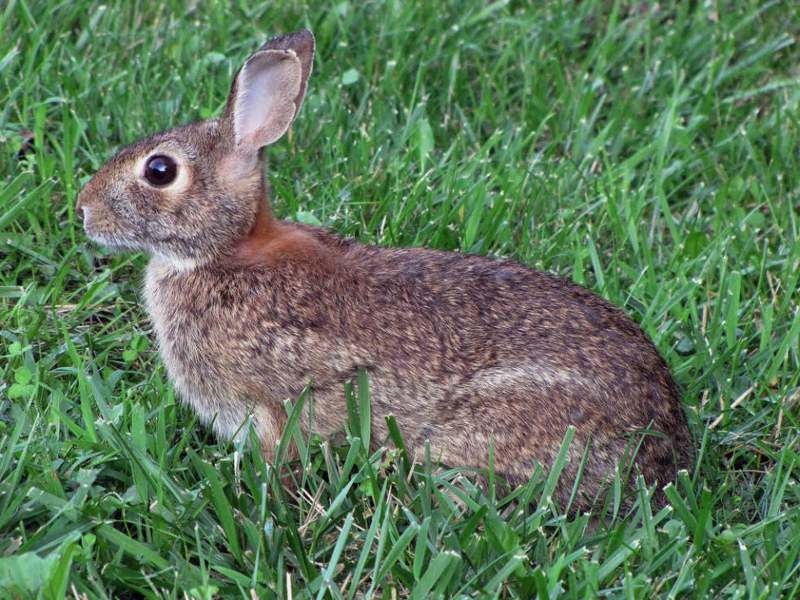
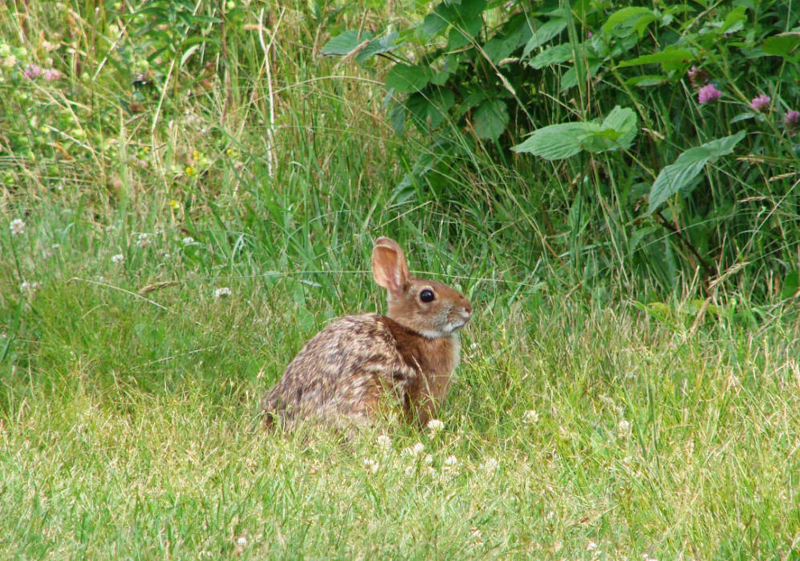
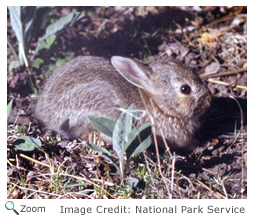
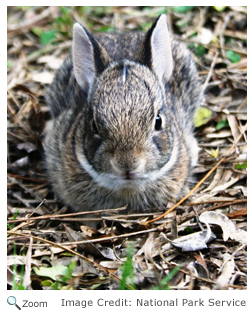
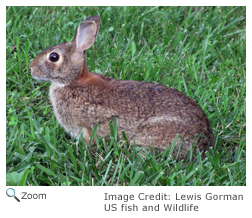 The eastern cottontail has speckled brown-gray fur above, reddish-brown fur around its neck and shoulders, and lighter fur around its nose and on its undersides.
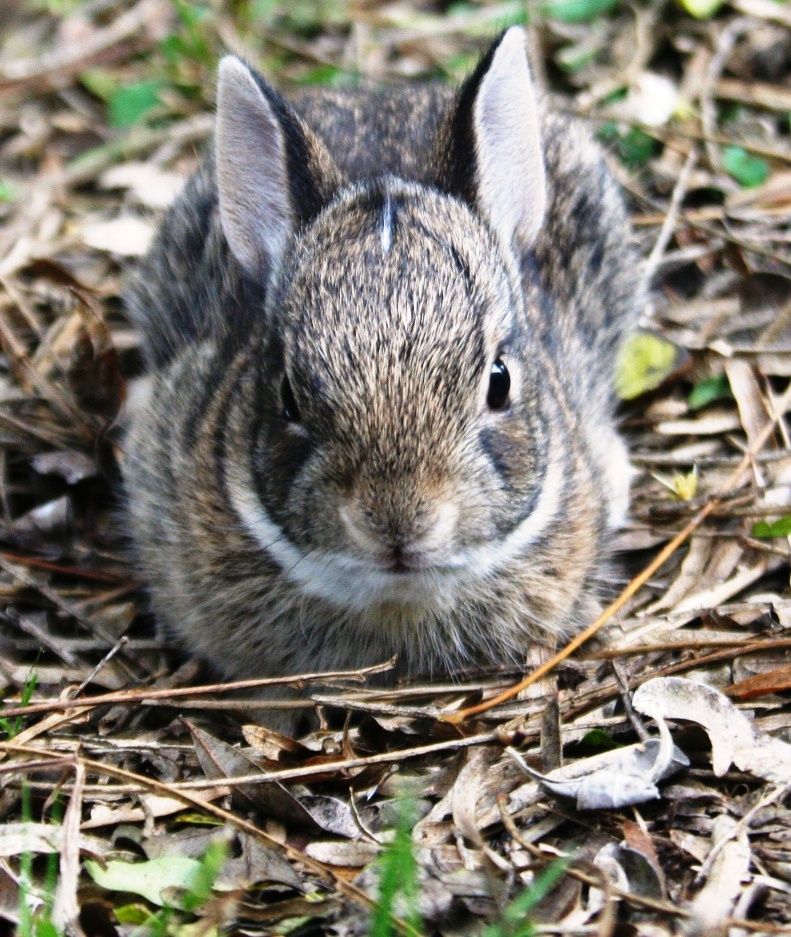
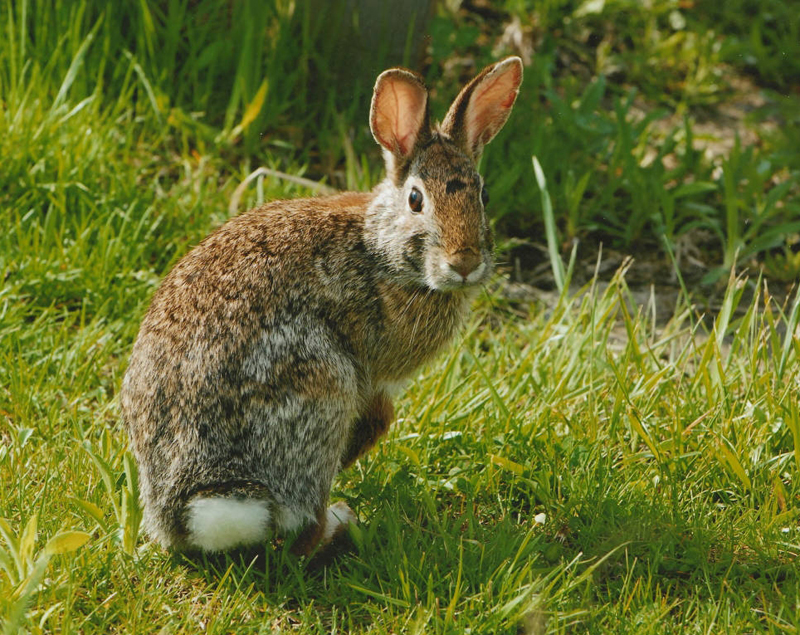
It has big eyes and a tail that is puffy white on the underside. In the winter, its fur may be more gray than brown. The eastern cottontail has speckled brown-gray fur above, reddish-brown fur around its neck and shoulders, and lighter fur around its nose and on its undersides.
It has big eyes and a tail that is puffy white on the underside. In the winter, its fur may be more gray than brown.
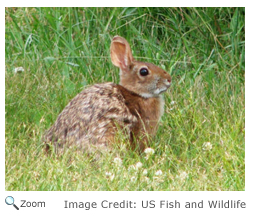 There is another species of cottontail in New England, the New England cottontail (Sylvilagus transitionalis), that is very similar to the eastern cottontail. It has a black patch between its ears and is usually smaller than the eastern cottontail and has shorter ears. It rarely comes out into the open.
Both species of cottontail are found in New Hampshire. The New England cottontail is native to the state. The eastern cottontail was introduced to the state from the midwest in the early 1900s. There is another species of cottontail in New England, the New England cottontail (Sylvilagus transitionalis), that is very similar to the eastern cottontail. It has a black patch between its ears and is usually smaller than the eastern cottontail and has shorter ears. It rarely comes out into the open.
Both species of cottontail are found in New Hampshire. The New England cottontail is native to the state. The eastern cottontail was introduced to the state from the midwest in the early 1900s.
Range
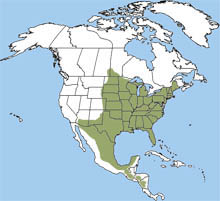 The eastern cottontail is found from extreme southern Canada south to South America. In the U.S., it is found in most of the Eastern U.S. and in parts of New Mexico and Arizona. The eastern cottontail is found from extreme southern Canada south to South America. In the U.S., it is found in most of the Eastern U.S. and in parts of New Mexico and Arizona.
Habitat
The eastern cottontail prefers habitats that are between woody areas and open land. It is found in bushy areas, fields, woodlands, swamps, and thickets.
Diet
The eastern cottontail is an herbivore. It eats a variety of different plants including grasses, clover, fruits, and vegetables. In the winter, it eats the woody parts of plants like the twigs and the bark of brambles, birch, oak, dogwood, and maple trees
|
|
Lifecycle
 During mating season, males often fight with each other. The male and female also perform a kind of mating "dance". The male chases the female. Eventually the female stops and faces the male and boxes at him with her front paws. At some point, one of them leaps straight up in the air, and then the other one jumps up in the air too. During mating season, males often fight with each other. The male and female also perform a kind of mating "dance". The male chases the female. Eventually the female stops and faces the male and boxes at him with her front paws. At some point, one of them leaps straight up in the air, and then the other one jumps up in the air too.
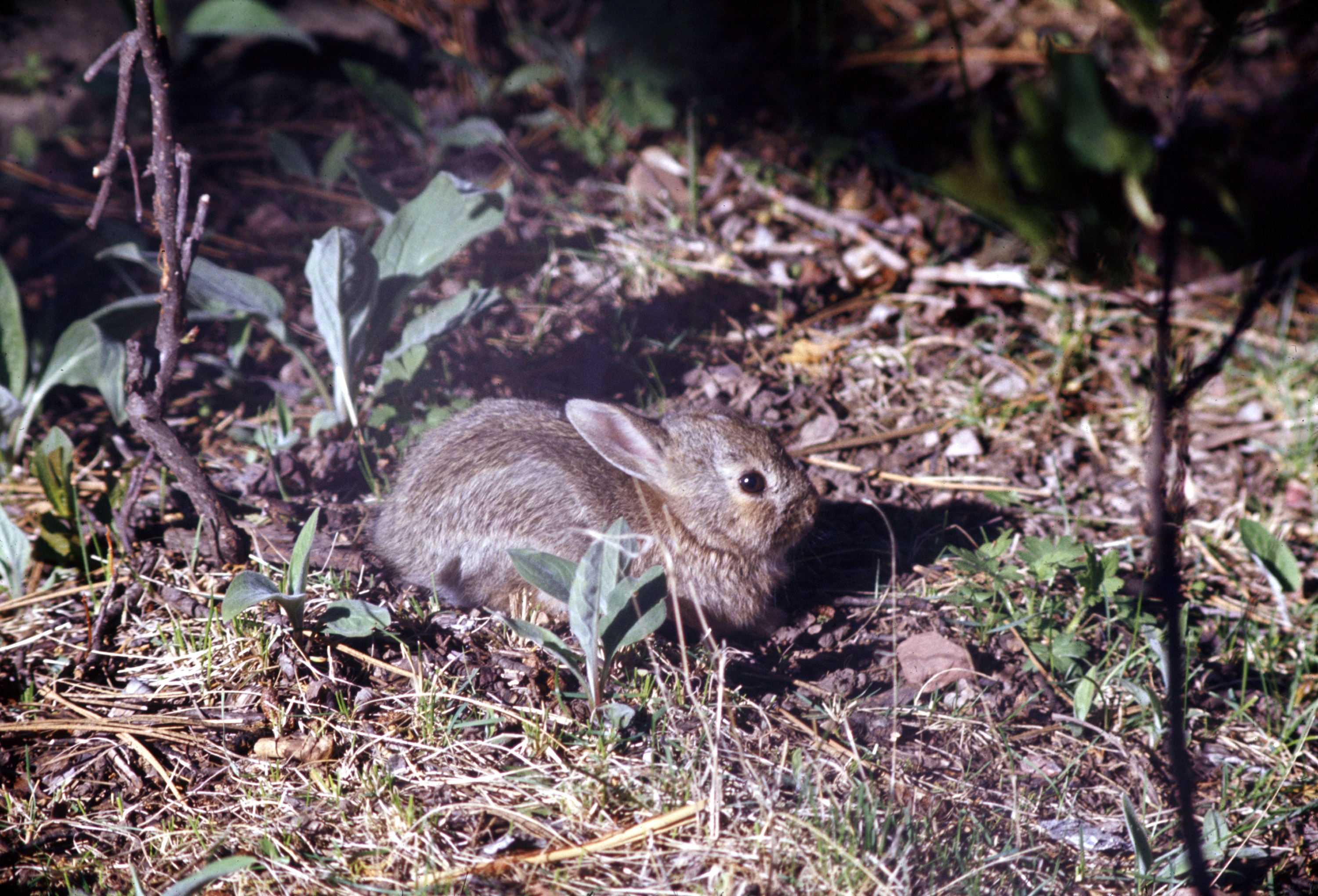
 The eastern cottontail mates between February and September. The female builds a nest in a depression in the ground and lines it with soft materials and fur from her chest. The female gives birth about a month after mating. She has between one to nine babies, although she usually has four to five young. The female feeds the young twice a day. The babies are weaned after about three weeks and leave the nest after about seven weeks. The female may mate again just hours after giving birth. Females can have three or four litters a year. Eastern cottontails are ready to mate when they are three months old. The eastern cottontail mates between February and September. The female builds a nest in a depression in the ground and lines it with soft materials and fur from her chest. The female gives birth about a month after mating. She has between one to nine babies, although she usually has four to five young. The female feeds the young twice a day. The babies are weaned after about three weeks and leave the nest after about seven weeks. The female may mate again just hours after giving birth. Females can have three or four litters a year. Eastern cottontails are ready to mate when they are three months old.
Behavior 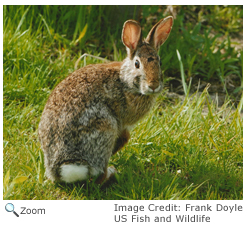 The eastern cottontail is solitary and very territorial. It is mostly nocturnal, but it sometimes comes out in the early morning and at dusk and sometimes during the day on dark days. The eastern cottontail can leap distances of between 10 and 15 feet. It sometimes stands on its hind feet to watch for predators like coyotes, foxes, weasels, eagles, and hawks. When a predator is chasing it, the eastern cottontail often leaps from side to side to break its scent trail. It can run at speeds of up to 15 mph. The eastern cottontail is solitary and very territorial. It is mostly nocturnal, but it sometimes comes out in the early morning and at dusk and sometimes during the day on dark days. The eastern cottontail can leap distances of between 10 and 15 feet. It sometimes stands on its hind feet to watch for predators like coyotes, foxes, weasels, eagles, and hawks. When a predator is chasing it, the eastern cottontail often leaps from side to side to break its scent trail. It can run at speeds of up to 15 mph.
Video Credit: US Fish and Wildlife
|