Description
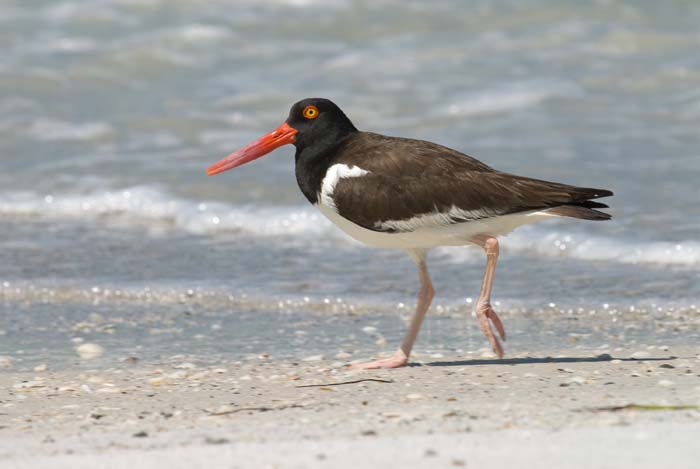
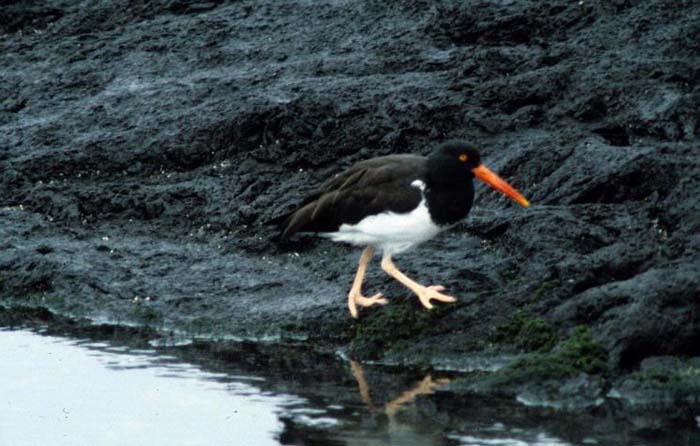
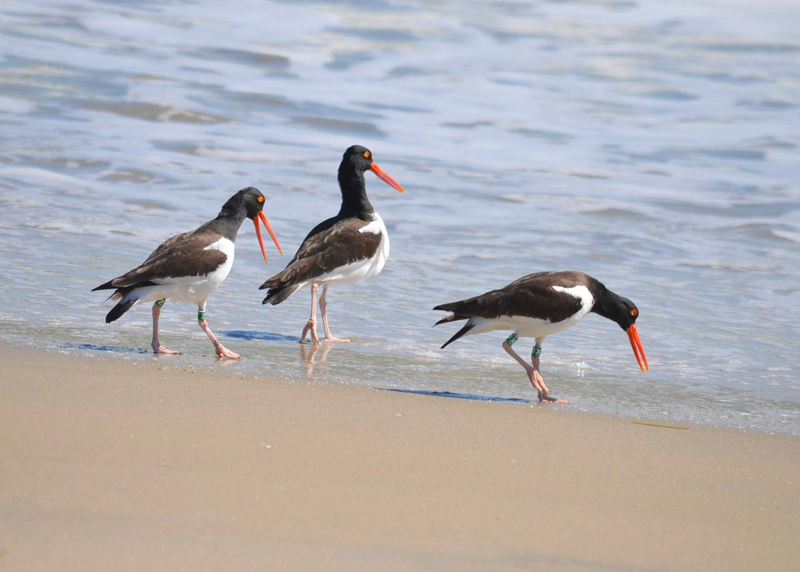
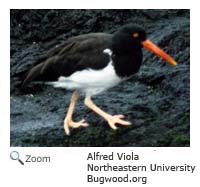
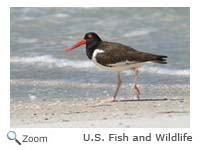 The American oystercatcher is a large shorebird. It is 17-21 inches in length. It has long pink legs and a long, bright reddish-orange bill. It has black feathers on top and white feathers on its underside and rump. It has a large white stripe on its wings that is visible when it is in flight. Its eyes are yellow with an orange ring around them. Males and females look alike. The American oystercatcher is a large shorebird. It is 17-21 inches in length. It has long pink legs and a long, bright reddish-orange bill. It has black feathers on top and white feathers on its underside and rump. It has a large white stripe on its wings that is visible when it is in flight. Its eyes are yellow with an orange ring around them. Males and females look alike.
Range 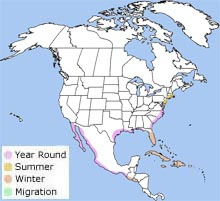 The American oystercatcher breeds along the Atlantic and Gulf Coasts from Massachusetts south to Argentina and Chile. It winters from New Jersey south to South America. The American oystercatcher is also found on the Pacific Coast from Baja California south to South America The American oystercatcher breeds along the Atlantic and Gulf Coasts from Massachusetts south to Argentina and Chile. It winters from New Jersey south to South America. The American oystercatcher is also found on the Pacific Coast from Baja California south to South America
Habitat
 The American oystercatcher is found on rocky and sandy beaches, on mudflats, and on the edges of salt marshes. While the American oystercatcher is not listed as a federally threatened or endangered species, it is vulnerable to loss of habitat due to development on the coasts where it breeds and winters. The American oystercatcher is found on rocky and sandy beaches, on mudflats, and on the edges of salt marshes. While the American oystercatcher is not listed as a federally threatened or endangered species, it is vulnerable to loss of habitat due to development on the coasts where it breeds and winters. |
|
Diet
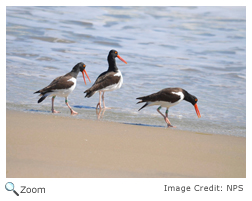 The American oystercatcher uses its long bill to pry open mussels, oysters, and other bivalves. They snap the adductor muscles of the bivalves with their long bill so the shell can't close up. The American oystercatcher also eats barnacles, starfish, crabs, and jellyfish. It forages in shallow water by sticking its bill in the mud and probing for food. The American oystercatcher uses its long bill to pry open mussels, oysters, and other bivalves. They snap the adductor muscles of the bivalves with their long bill so the shell can't close up. The American oystercatcher also eats barnacles, starfish, crabs, and jellyfish. It forages in shallow water by sticking its bill in the mud and probing for food.
Life Cycle
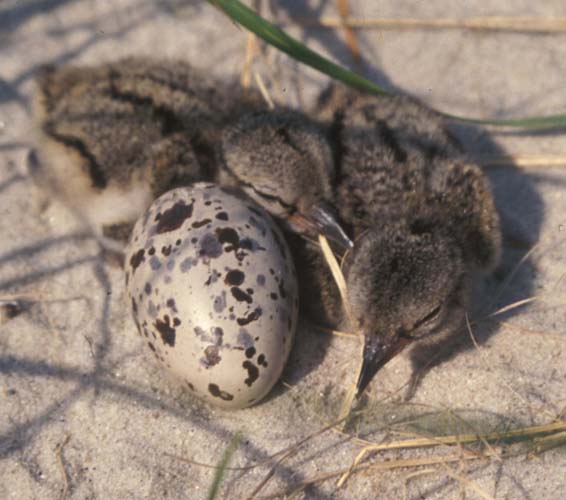
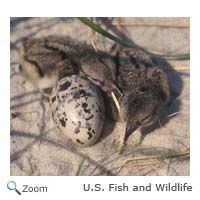 The American oystercatcher breeds from April-July. The female oystercatcher lays two to four eggs in a shallow depression lined with pieces of shell in a sandy dune or on a salt marsh island. Both the male and the female incubate the eggs for 24-27 days. Both parents care for the chicks. The chicks fledge when they are 30-35 days old, but their parents continue to care for them for another month. The American oystercatcher first breeds when it is three or four years old. The American oystercatcher breeds from April-July. The female oystercatcher lays two to four eggs in a shallow depression lined with pieces of shell in a sandy dune or on a salt marsh island. Both the male and the female incubate the eggs for 24-27 days. Both parents care for the chicks. The chicks fledge when they are 30-35 days old, but their parents continue to care for them for another month. The American oystercatcher first breeds when it is three or four years old.
Behavior
American oystercatchers don't live in colonies, but they do gather in large groups before migrating.
|