Additional Information
Key:  Profile Profile  Photos Photos  Video Video  Audio Audio
Echidna
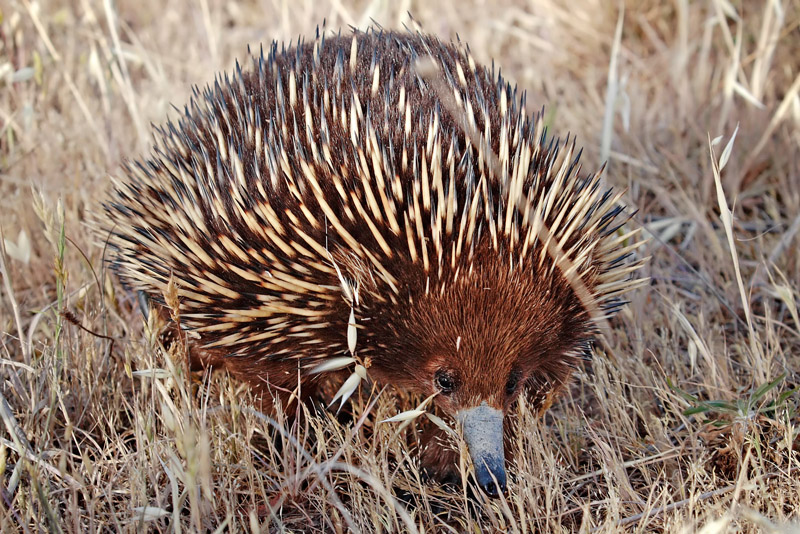
Echidna are also called spiny anteaters. It uses its long tongue to capture ants, termites, and worms.
Source: San Diego Zoo Intended Audience: Students Reading Level: Elementary/Middle School
Echidnas
Did you know that echidnas vary in color depending on where they live in Australia and New Guinea? Read more about these unique monotremes.
Source: New South Wales Department of Environment & Conservation Intended Audience: General Reading Level: Middle School
Echidnas
When the echidna is threatened, it curls up in a ball to protect it fur covered belly. Learn more!
Source: Our Animals Intended Audience: Students Reading Level: Elementary School
Echidna
Print out a diagram of an echidna and learn more at this site for kids.
Source: Enchanted Learning Intended Audience: Students Reading Level: Elementary School
Eastern Long-beaked Echidna - Zaglossus bartoni   
The eastern long-beaked echidna is found in Indonesia and Papua New Guinea.
Source: Arkive Intended Audience: General Reading Level: Middle School
Short-beaked Echidna - Tachyglossus aculeatus 
The short -beaked echidna is found in Australia, Indonesia, and Papua New Guinea.
Source: Arkive Intended Audience: General Reading Level: Middle School
Short-beaked Echidna - Tachyglossus aculeatus
The short -beaked echidna is found in a variety of habitats including open woodlands, savanna, agricultural areas, semi-arid, and arid regions.
Source: Animal Diversity Web Intended Audience: General Reading Level: Middle School
Short-beaked Echidna - Tachyglossus aculeatus
Echidnas don't have true pouches, they have pouch-like folds of skin that hold their babies. Speaking of babies, have you ever seen a puggle? That's what a baby echidna is called. You can see two here: baby short-beaked echidna.
Source: Perth Zoo Intended Audience: General Reading Level: Elementary/Middle School
Short-beaked Echidna- Tachyglossus aculeatus
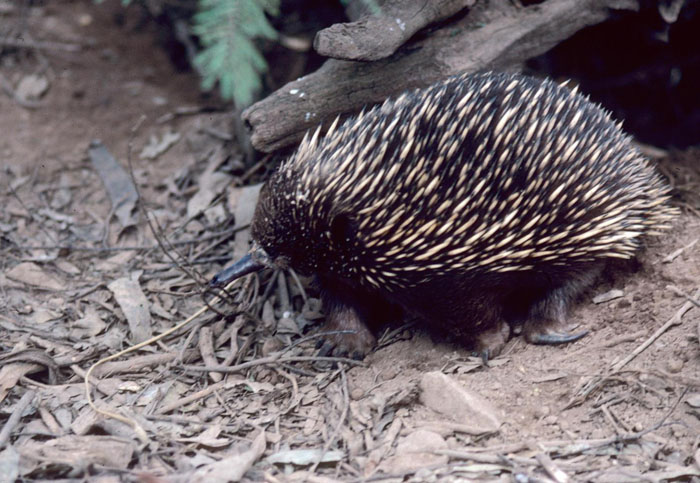
The echidna's rear feet point backwards. This helps them dig, but it give them a funny rolling walk! Learn more!
Source: Philadelphia Zoo Intended Audience: Students Reading Level: Elementary/Middle School
Short-beaked Echidna - Tachyglossus aculeatus
Echidnas are shy creatures who live alone. Find out more here!
Source: St. Louis Zoo Intended Audience: Students Reading Level: Elementary/Middle School Teacher Section:Yes
Short-beaked Echidna - Tachyglossus aculeatus
Learn more about the short-beaked echidna and try your hand at a crossword puzzle or pattern for kids to sew a baby echidna.
Source: Pelican Lagoon Research & Wildlife Centre Intended Audience: General Reading Level: Middle School
Sir David's Long-beaked Echidna - Zaglossus attenboroughi
This article from the BBC looks at evidence that a species of long-beaked echidna named after TV naturalist Sir David Attenborough, is not extinct as previously thought.
Source: BBC Intended Audience: General Reading Level: Middle School
Western Long-beaked Echidna - Zaglossus bruijnii
The western long-beaked echidna is found in Indonesia .
Source: Arkive Intended Audience: General Reading Level: Middle School
Long-beaked Echidna
Find out what it takes to study the rare and elusive long-beaked echidna.
Source: New York Times Intended Audience: General Reading Level: Middle School
Western Long-beaked Echidna - Zaglossus bruijnii
The long-beaked echidna has a long, downcurved snout. Learn more here.
Source: Animal Diversity Web Intended Audience: General Reading Level: Middle School
|



 Near Threatened
  Vulnerable
  Endangered
  Extinct in Wild
  Extinct
 Threatened in NH
  Endangered in US
 Endangered in NH
  Introduced
 Africa
  Europe
  North America
  South America
  NH
NH  Click for More Info
  Click for Image