Description
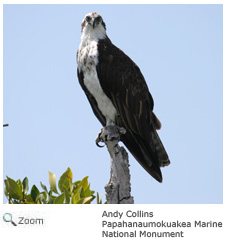 The osprey has a wingspan of 4.5 to 6
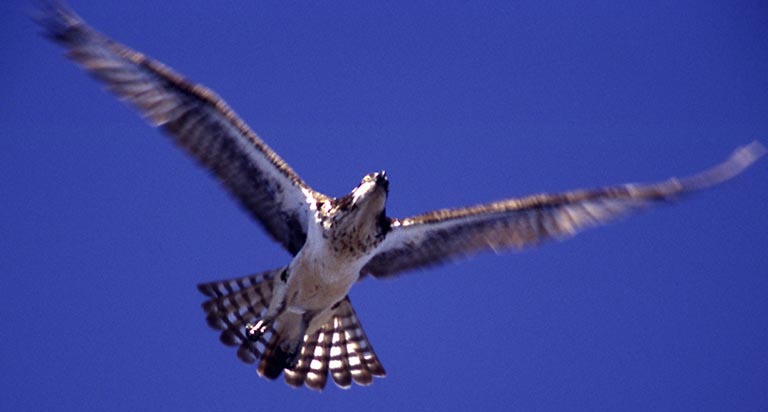
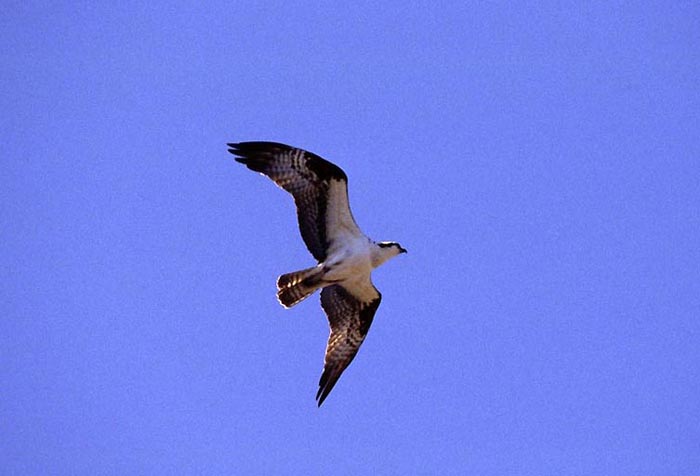
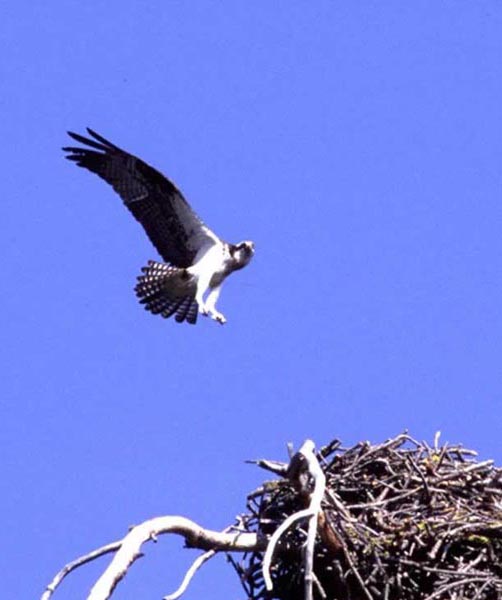
feet and stands about 2 feet tall. It is brown on its upperside and white on its face, the top of its head, throat, chest, and belly. It has a dark line on the side of its face that runs over its yellow eyes.
The osprey has powerful legs and pale gray feet with sharp talons that help it catch fish. The osprey's feet have rough, pointed scales on them that help the osprey hold onto the fish it catches.
Its feet have two toes pointing backwards that also help the osprey grab and hold onto fish.
The osprey is also known as the
fish hawk. The osprey has a wingspan of 4.5 to 6
feet and stands about 2 feet tall. It is brown on its upperside and white on its face, the top of its head, throat, chest, and belly. It has a dark line on the side of its face that runs over its yellow eyes.
The osprey has powerful legs and pale gray feet with sharp talons that help it catch fish. The osprey's feet have rough, pointed scales on them that help the osprey hold onto the fish it catches.
Its feet have two toes pointing backwards that also help the osprey grab and hold onto fish.
The osprey is also known as the
fish hawk.
Range
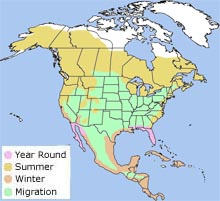 The osprey is found on every continent, except Antarctica. In North America, the osprey breeds from Alaska, north-central Canada, and Newfoundland south to Arizona and New Mexico . It is also found along the Gulf, Atlantic, and Pacific Coasts. It winters from the southern United States south to South America. The osprey is found on every continent, except Antarctica. In North America, the osprey breeds from Alaska, north-central Canada, and Newfoundland south to Arizona and New Mexico . It is also found along the Gulf, Atlantic, and Pacific Coasts. It winters from the southern United States south to South America.
Habitat 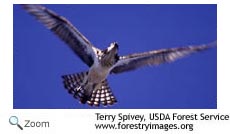 The osprey is found
on lakes, rivers, and seacoasts where there is shallow water and plenty of fish! The osprey is found
on lakes, rivers, and seacoasts where there is shallow water and plenty of fish!
Diet
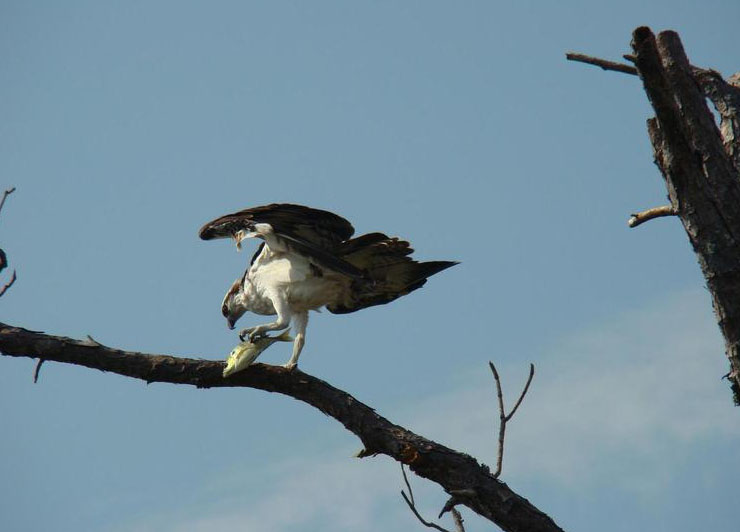
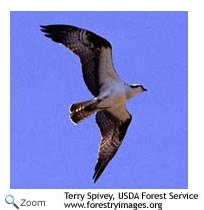 The osprey hovers about 100 feet over the water and uses its excellent eyesight to spot fish. When it locates a fish, it dives feet-first with its talons outstretched straight into the water and grabs its prey. It takes off from the water and adjusts the fish in its talons so the fish is facing head first. This makes the fish more
aerodynamic and easier to carry! The osprey then
flies to a perch to eat its catch. Sometimes, bald eagles steal fish from ospreys!
Once in a while an osprey captures a fish that is too big. If it can't let go of the fish, it tries to drag it to shore. If that fails, the osprey can be pulled under the water by the weight of the fish and drown. The osprey hovers about 100 feet over the water and uses its excellent eyesight to spot fish. When it locates a fish, it dives feet-first with its talons outstretched straight into the water and grabs its prey. It takes off from the water and adjusts the fish in its talons so the fish is facing head first. This makes the fish more
aerodynamic and easier to carry! The osprey then
flies to a perch to eat its catch. Sometimes, bald eagles steal fish from ospreys!
Once in a while an osprey captures a fish that is too big. If it can't let go of the fish, it tries to drag it to shore. If that fails, the osprey can be pulled under the water by the weight of the fish and drown. |
|
Life Cycle
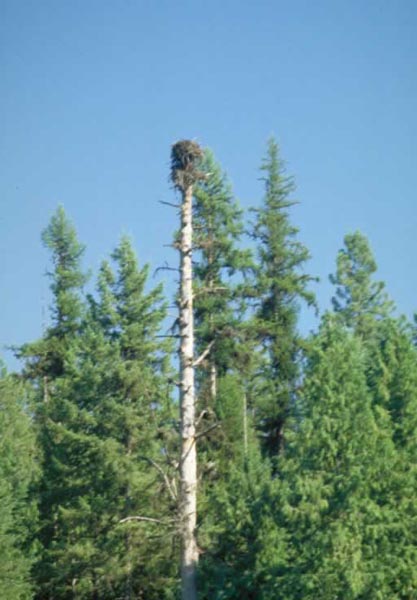
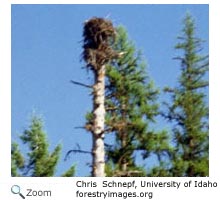 Osprey pairs build large nests of sticks lined with seaweed, grass, and other soft materials. Nests are always built within a few miles of water and are usually built 10-60 feet above the ground. Nests can be built on a variety of natural and man-made structures including dead treetops, cliffs, telephone poles, channel markers,
communication towers, buildings, billboards,
and specially designed osprey nest platforms. Nest platforms have been placed in areas where osprey numbers have dropped in an effort to lure the bird back. Osprey pairs build large nests of sticks lined with seaweed, grass, and other soft materials. Nests are always built within a few miles of water and are usually built 10-60 feet above the ground. Nests can be built on a variety of natural and man-made structures including dead treetops, cliffs, telephone poles, channel markers,
communication towers, buildings, billboards,
and specially designed osprey nest platforms. Nest platforms have been placed in areas where osprey numbers have dropped in an effort to lure the bird back.
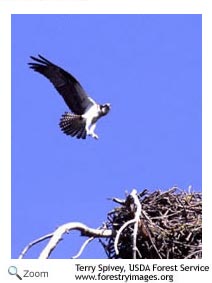 Osprey nests are used to raise chicks and also as a home base for adults. Osprey pairs use the same nest for many years. The male brings food to the female before she lays her eggs. The female lays 1-4 eggs over a period of a few days.
Both the male and female incubate the eggs for about 40 days. The chicks are covered with down when they are born. Both parents feed the chicks. If more than one chick is born and food is scarce, the runt of the brood may die of starvation. Chicks fledge when they are between 50-75 days old and can begin hunting on their own, but they may continue to receive food from their parents for two months. Osprey nests are used to raise chicks and also as a home base for adults. Osprey pairs use the same nest for many years. The male brings food to the female before she lays her eggs. The female lays 1-4 eggs over a period of a few days.
Both the male and female incubate the eggs for about 40 days. The chicks are covered with down when they are born. Both parents feed the chicks. If more than one chick is born and food is scarce, the runt of the brood may die of starvation. Chicks fledge when they are between 50-75 days old and can begin hunting on their own, but they may continue to receive food from their parents for two months.
Behavior
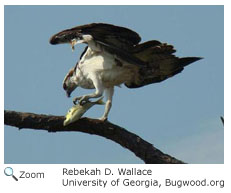 The pesticide DDT led to a drop in osprey populations between the 1950s and 1970s. The pesticide DDT, which was used to control insects that damaged crops, was getting into the food that the osprey ate. The pesticide made it more difficult for the osprey to absorb calcium and the lack of calcium made the shells of the osprey's eggs thinner. Many eggs broke before they could hatch and the osprey population dropped. DDT use was outlawed in the U.S. in 1972, and the osprey population has slowly recovered. The pesticide DDT led to a drop in osprey populations between the 1950s and 1970s. The pesticide DDT, which was used to control insects that damaged crops, was getting into the food that the osprey ate. The pesticide made it more difficult for the osprey to absorb calcium and the lack of calcium made the shells of the osprey's eggs thinner. Many eggs broke before they could hatch and the osprey population dropped. DDT use was outlawed in the U.S. in 1972, and the osprey population has slowly recovered.
|



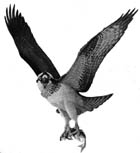

 Least Concern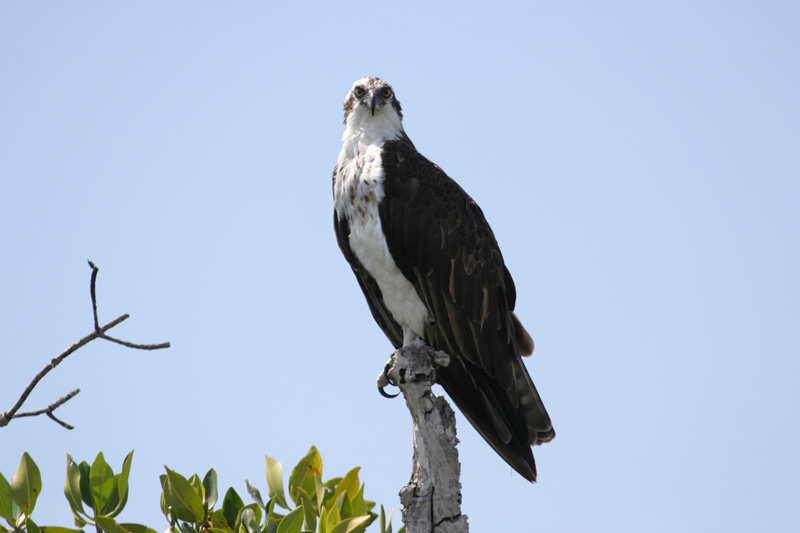
)
)
)
)
)
)