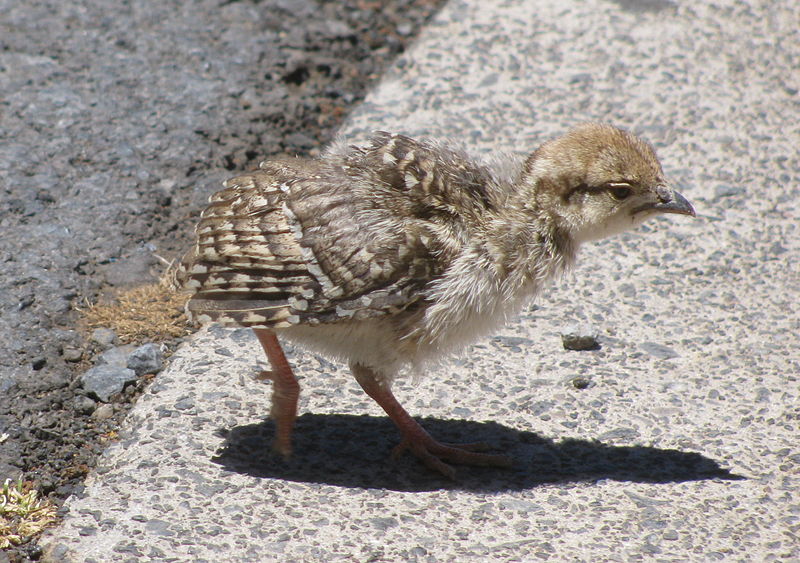
Description
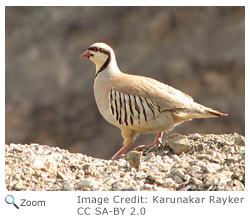 The chukar is a The chukar is a
non-native species that was introduced to North America as a game bird in the late 1800s. It is native to the mountainous areas of the Middle East and Asia. It is a member of the pheasant family.
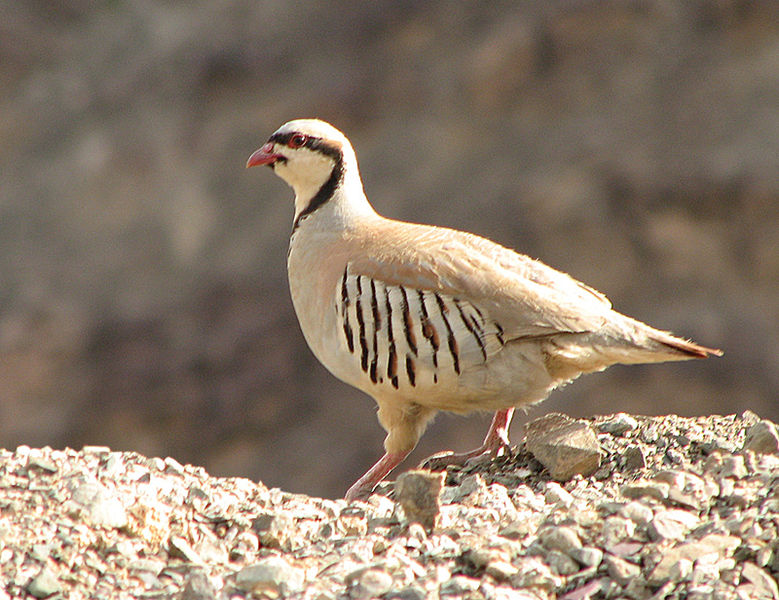
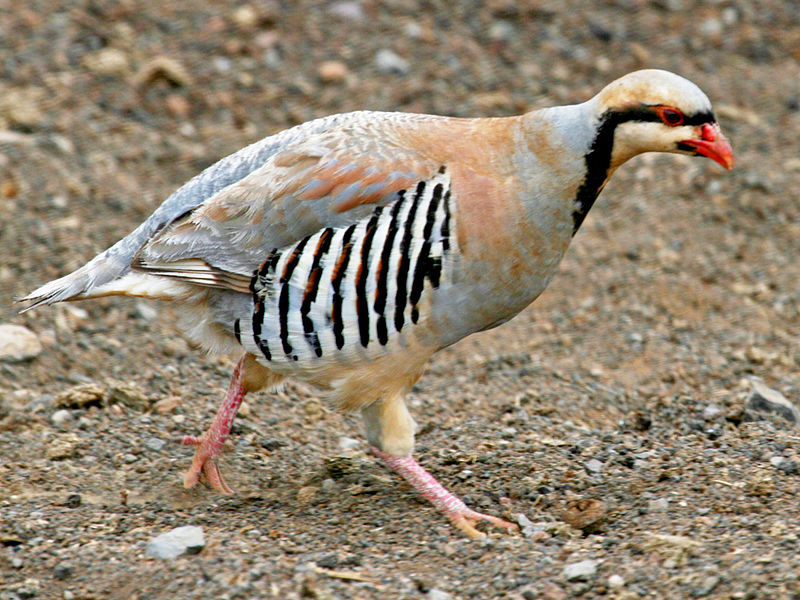
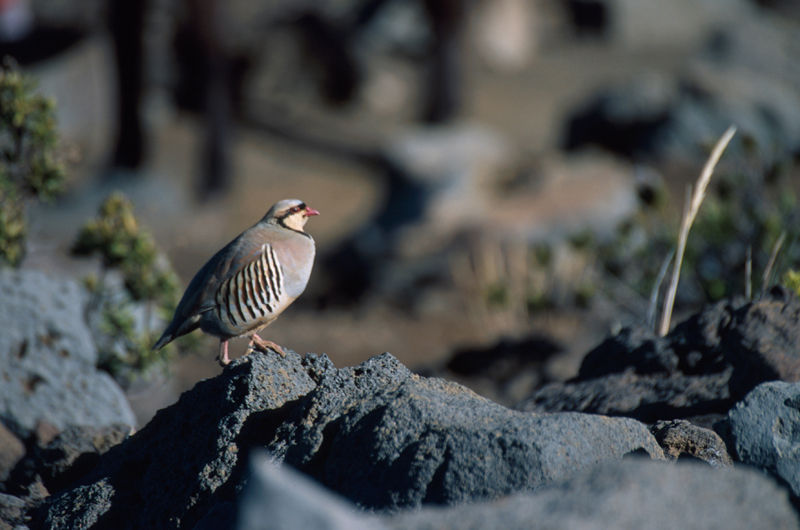
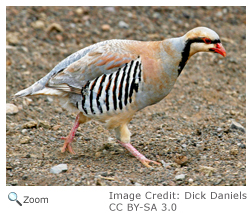 It stands about 13-15 inches in length and has a light grayish-brown back and wings and a white belly. Its head, chest, and rear are gray, and it has white cheeks and a white throat surrounded by a black band. It has black stripes on its sides and a black band across its forehead. Its bill, eyelids, feet, and legs are pink to dark red. Males and females look alike. It stands about 13-15 inches in length and has a light grayish-brown back and wings and a white belly. Its head, chest, and rear are gray, and it has white cheeks and a white throat surrounded by a black band. It has black stripes on its sides and a black band across its forehead. Its bill, eyelids, feet, and legs are pink to dark red. Males and females look alike.
Range 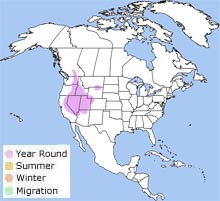 The chukar is found from British Columbia and Alberta south to California and Colorado. The chukar has also been introduced to Hawaii. It is also found in Europe and Asia. The chukar is found from British Columbia and Alberta south to California and Colorado. The chukar has also been introduced to Hawaii. It is also found in Europe and Asia.
| |
Habitat
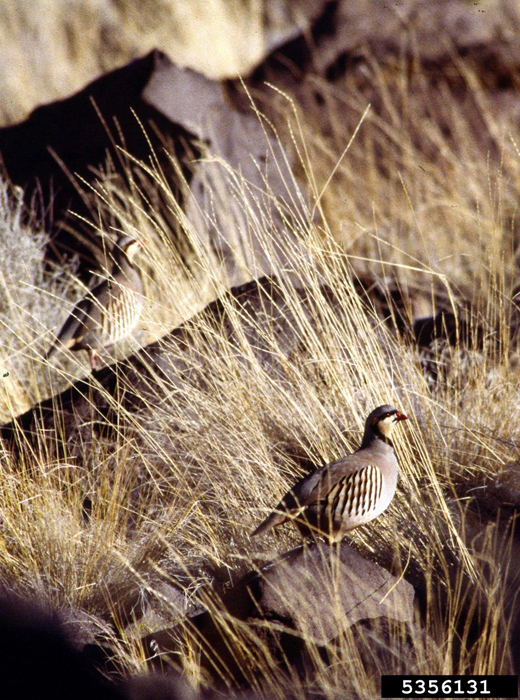
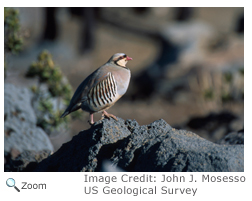 The chukar lives on rocky, arid hillsides, mountain slopes, and canyon walls. It is also found in open and flat desert areas with little vegetation and on barren plateaus. It is an altitudinal migrator and will move from higher elevations to lower elevations during snowy weather. The chukar lives on rocky, arid hillsides, mountain slopes, and canyon walls. It is also found in open and flat desert areas with little vegetation and on barren plateaus. It is an altitudinal migrator and will move from higher elevations to lower elevations during snowy weather.
Diet
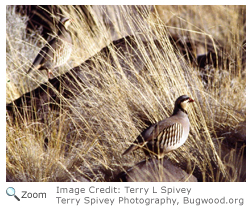 The chukar feeds on seeds, grasses, bulbs, stems, fruit, and leaves. It also eats small amounts of insects like grasshoppers, caterpillars, crickets, and ants. The chukar feeds on seeds, grasses, bulbs, stems, fruit, and leaves. It also eats small amounts of insects like grasshoppers, caterpillars, crickets, and ants.
Life CycleMale and female chukars form pairs from February through April. The male performs a courtship ritual that involves head-tilting and showing his barred flanks. Both the male and female call out to each other and peck at objects on the ground.
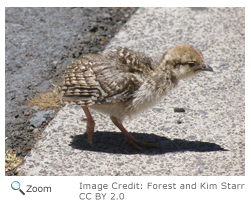 The female lays 8-15 eggs in a scrape lined with grass, leaves, and feathers placed within the shelter of rocks or brush. The male often leaves the female after she has laid her eggs. The chicks hatch after about 24 days. They are precocial and leave the nest and start feeding on insects shortly after hatching. They begin to fly when they are about two weeks old. The female lays 8-15 eggs in a scrape lined with grass, leaves, and feathers placed within the shelter of rocks or brush. The male often leaves the female after she has laid her eggs. The chicks hatch after about 24 days. They are precocial and leave the nest and start feeding on insects shortly after hatching. They begin to fly when they are about two weeks old.
Behavior
The chukar rarely flies. It is a good runner and can also hop across the rocky terrain in its habitat. Except for during breeding season, chukars live in coveys of up to 40 birds.
|