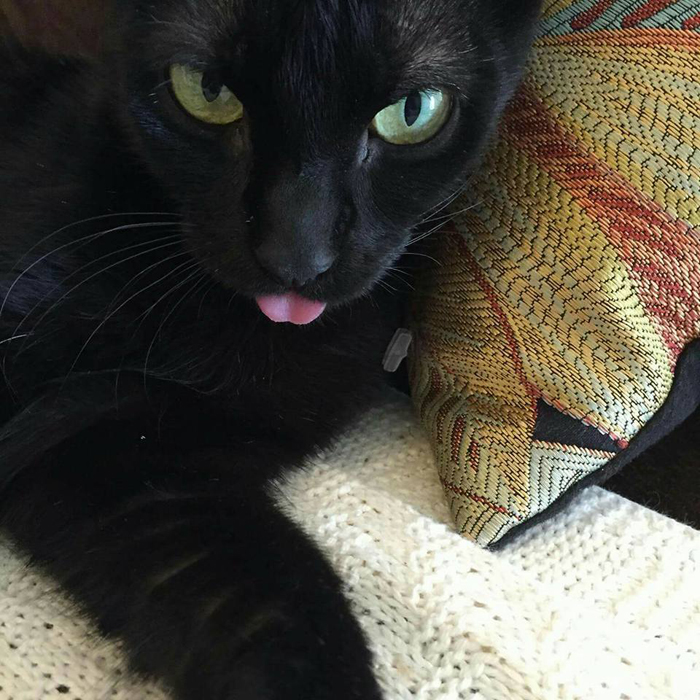
Many animals use chemical communication or pheromones to communicate. They may leave their scent to mark territory or attract mates. They often use smell to find prey and identify other animals.
Home, Sweet, Pheromone
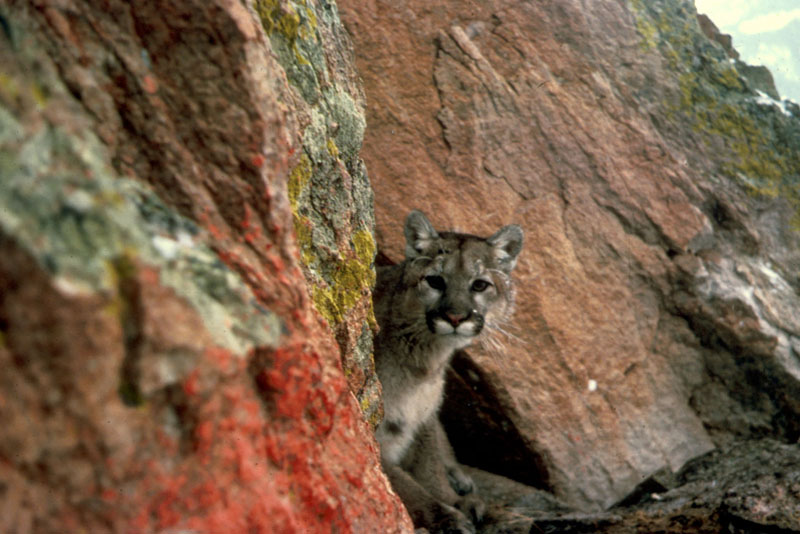
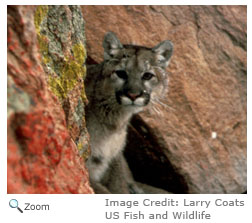 Animals often use chemical communication to mark territory. They leave pheromones, or chemical marks, behind. Some animals leave scent posts to mark their territory. A scent post is something that is marked by an animal with its scent. Scent posts set the boundaries of an animal's territory. The mountain lion is a solitary animal and it likes to travel alone. A male's territory can be more that 100 square miles. The male mountain lion often kicks up piles of pine needles, dirt, or leaves with its hind feet and urinates on the pile to mark its territory. Animals often use chemical communication to mark territory. They leave pheromones, or chemical marks, behind. Some animals leave scent posts to mark their territory. A scent post is something that is marked by an animal with its scent. Scent posts set the boundaries of an animal's territory. The mountain lion is a solitary animal and it likes to travel alone. A male's territory can be more that 100 square miles. The male mountain lion often kicks up piles of pine needles, dirt, or leaves with its hind feet and urinates on the pile to mark its territory.
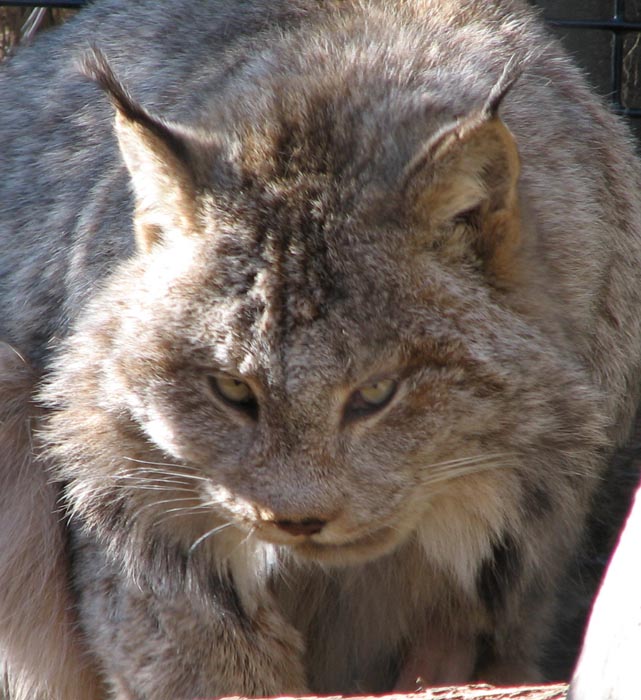
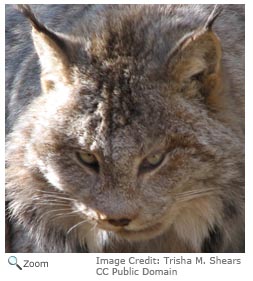 The Canada lynx also leaves a scent post. It urinates on trees and tree trunks. It may also leave claw marks on trees. Claw marks are a visual sign, but can also be a chemical one. Many animals have scent glands in their claws! When they scratch a tree, they leave a little of their scent behind. The Canada lynx also leaves a scent post. It urinates on trees and tree trunks. It may also leave claw marks on trees. Claw marks are a visual sign, but can also be a chemical one. Many animals have scent glands in their claws! When they scratch a tree, they leave a little of their scent behind.
Something in the Air
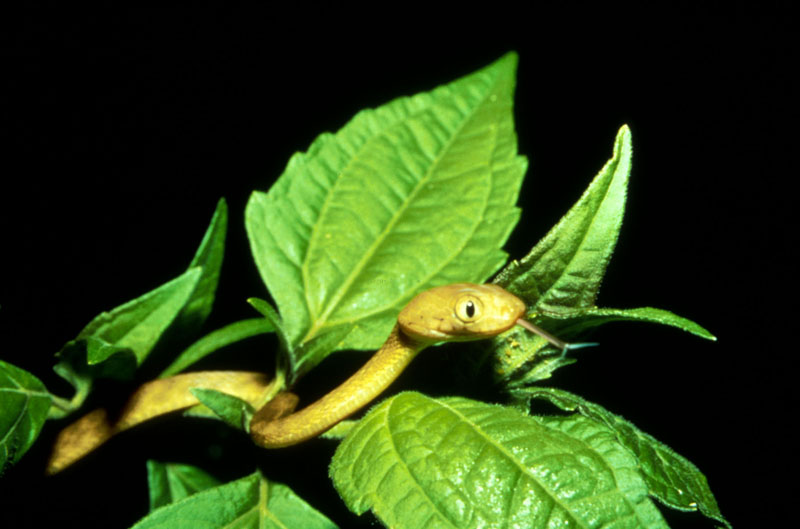
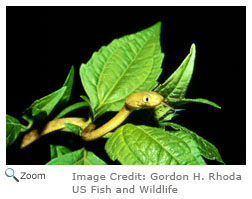 Snakes use their forked tongues to "taste" or collect pheromones of prey animals that are in the air. They have receptors in the roof of their mouths that help them taste and smell the pheromones. Snakes use their forked tongues to "taste" or collect pheromones of prey animals that are in the air. They have receptors in the roof of their mouths that help them taste and smell the pheromones. |
|
Do I Know You?
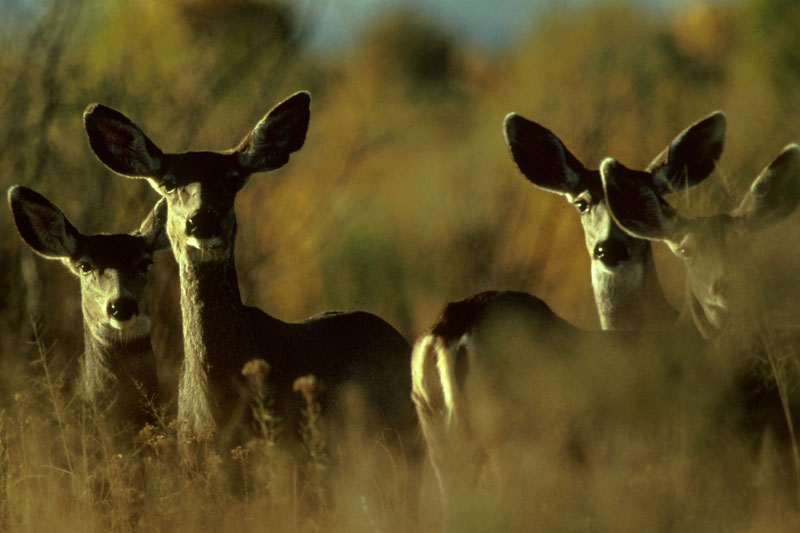
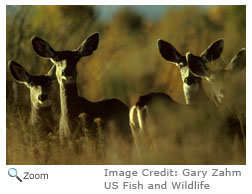 Some animals use scent to identify members of their family! The mule deer has scent glands on its hind legs, right above its hooves. Young deer often identify their mothers by sniffing at the glands. When mule deer are in groups, they often sniff the hind legs of other mule deer. When male mule deers become aggressive towards each other, the hair around the glands stands up! Some animals use scent to identify members of their family! The mule deer has scent glands on its hind legs, right above its hooves. Young deer often identify their mothers by sniffing at the glands. When mule deer are in groups, they often sniff the hind legs of other mule deer. When male mule deers become aggressive towards each other, the hair around the glands stands up!
You Belong to Me!
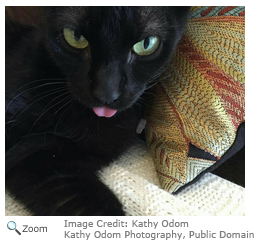 Have you ever seen a house cat rubbing its head up against someone? It is marking its territory! Domestic cats have scent glands near their mouths, on their foreheads, and at the base of their tails. They use these glands to mark territory. When other cats smell the scent, they know that another cat has marked its territory. Male domestic cats mark their mating territory by urinating. The next time you see a cat rubbing up against something, you'll know that it is claiming it as its property! Have you ever seen a house cat rubbing its head up against someone? It is marking its territory! Domestic cats have scent glands near their mouths, on their foreheads, and at the base of their tails. They use these glands to mark territory. When other cats smell the scent, they know that another cat has marked its territory. Male domestic cats mark their mating territory by urinating. The next time you see a cat rubbing up against something, you'll know that it is claiming it as its property! |