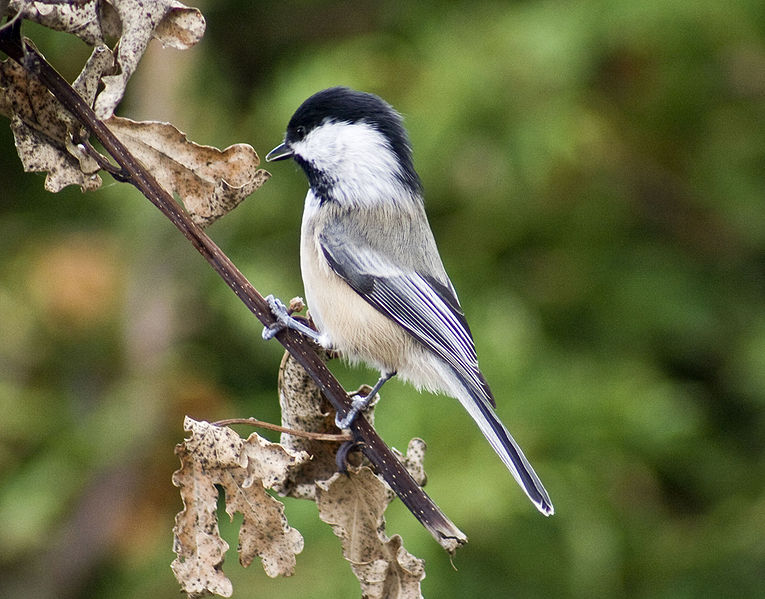
Description
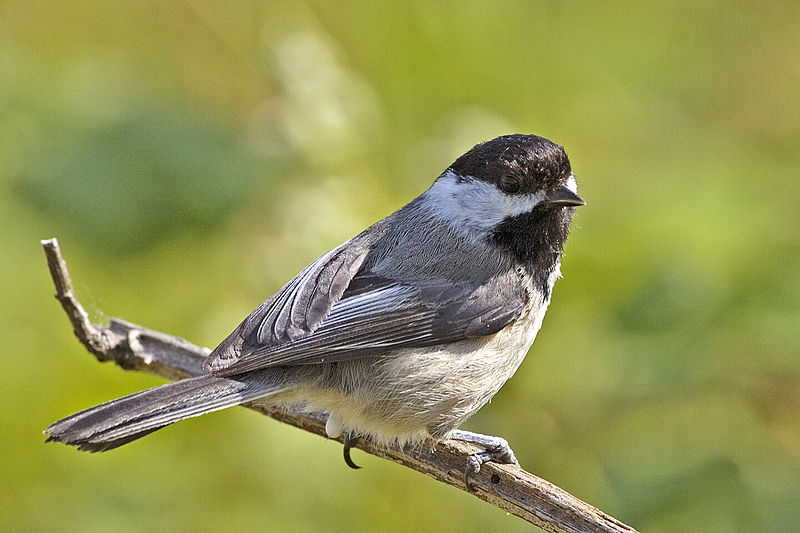
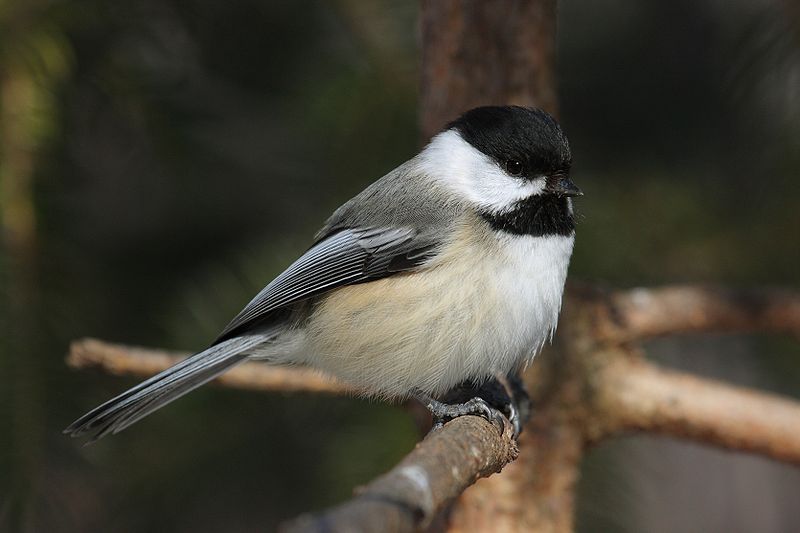
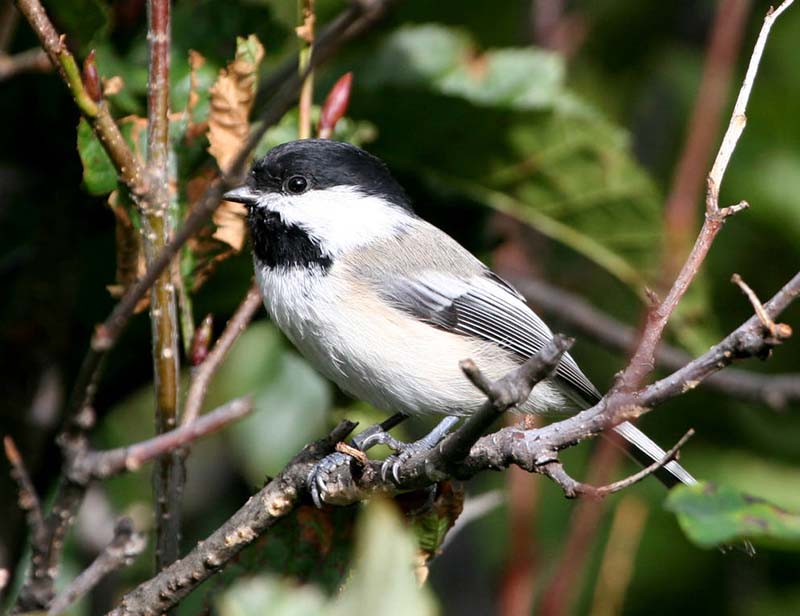
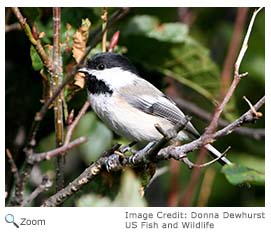
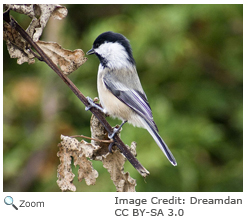
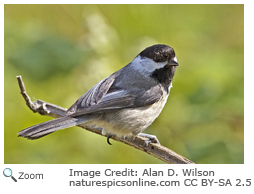 The black-capped chickadee is four to five inches in length with a wingspan of six to seven inches. It is gray on its uppersides and tail and has a black cap and throat bib, white cheeks, a white chest and belly, and light brown flanks right below its wings. The chickadee is named for its "chick-a-dee-dee-dee" call. Slight changes in its call are used to claim territory, to warn of predators, and to greet other chickadees. Males and females look alike. The black-capped chickadee is four to five inches in length with a wingspan of six to seven inches. It is gray on its uppersides and tail and has a black cap and throat bib, white cheeks, a white chest and belly, and light brown flanks right below its wings. The chickadee is named for its "chick-a-dee-dee-dee" call. Slight changes in its call are used to claim territory, to warn of predators, and to greet other chickadees. Males and females look alike.
Range 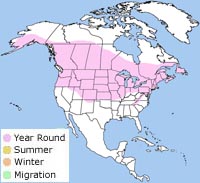 The black-capped chickadee is found from Alaska east though southern Canada and throughout the upper two-thirds of the United States, south to northern California, northern New Mexico, Missouri and northern New Jersey. The Black-capped chickadee is found in New Hampshire. The black-capped chickadee is found from Alaska east though southern Canada and throughout the upper two-thirds of the United States, south to northern California, northern New Mexico, Missouri and northern New Jersey. The Black-capped chickadee is found in New Hampshire.
Habitat
The black-capped chickadee lives in mixed deciduous and coniferous forests. In winter it is found in residential areas with trees.
Diet
The black-capped chickadee hops from branch to branch eating the insects, larvae, caterpillars, and spiders it finds on trees. It also eats seeds and berries. It sometimes stores food under bark or lichen. |
|
Life Cycle
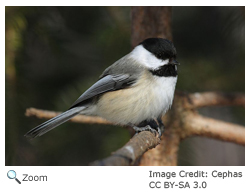 Black-capped chickadees form mating pairs during the late fall. Pairs usually stay together for a number of years and establish a territory and protect it while they are together. The male black-capped chickadee brings the female food during courtship. Black-capped chickadees form mating pairs during the late fall. Pairs usually stay together for a number of years and establish a territory and protect it while they are together. The male black-capped chickadee brings the female food during courtship.
 Both male and female make a nesting spot in a rotting tree stump or abandoned woodpecker hole. The female lines the nest with grass, down, fur, and moss. She lays five to nine eggs at a rate of one egg per day. The female incubates the eggs. While she is on the nest, the male feeds her. She may also leave the nest to feed herself. The chicks hatch in 13-14 days. Both parents feed and care for the chicks. The chicks fledge in 14 to 18 days, but continue to be fed by their parents for two to four weeks after fledging. Both male and female make a nesting spot in a rotting tree stump or abandoned woodpecker hole. The female lines the nest with grass, down, fur, and moss. She lays five to nine eggs at a rate of one egg per day. The female incubates the eggs. While she is on the nest, the male feeds her. She may also leave the nest to feed herself. The chicks hatch in 13-14 days. Both parents feed and care for the chicks. The chicks fledge in 14 to 18 days, but continue to be fed by their parents for two to four weeks after fledging.
Behavior
 Black-capped chickadees are non-migratory. They live in pairs during the spring and summer. In the fall and winter, they live in small flocks of six to ten individuals. These flocks are very territorial and chase intruders away. Black-capped chickadees are non-migratory. They live in pairs during the spring and summer. In the fall and winter, they live in small flocks of six to ten individuals. These flocks are very territorial and chase intruders away.
|