
Arctic Skipper - Carterocephalus palaemon |
|||||||
Description
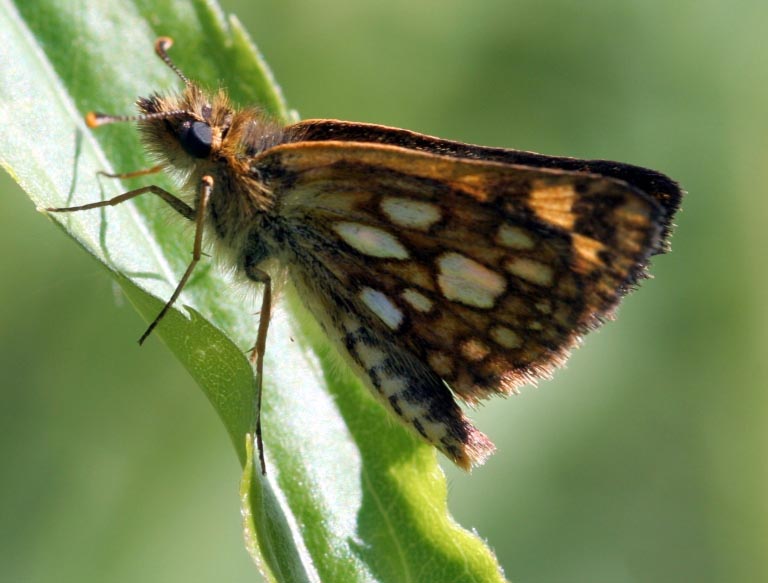
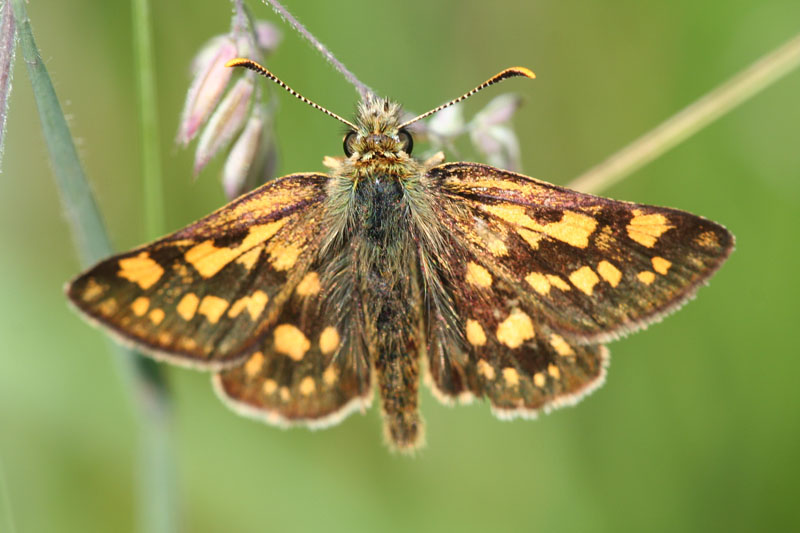
The Arctic skipper has a wingspan of 1 to 1.25 inches. The uppersides of its wings are dark brown with large orange spots and patches. The underside of its wings are tan to dark brown with white to cream colored spots edged in dark brown. Range |
HabitatThe Arctic skipper is found in moist meadows, bogs, grassy forest openings, and at the edges of streams. Diet
The Arctic skipper caterpillar eats a variety of grasses, including
purple reedgrass. The adult Arctic skipper eats nectar from flowers including
wild iris and Jacob's ladder. Lifecycle
|
||||||

 In North America, the Arctic skipper is found
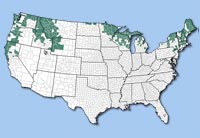
from central Alaska south to central California, in the Rocky Mountain region south to Wyoming, in the Great Lakes states, and in New York, New Jersey, Pennsylvania, and New England.
In North America, the Arctic skipper is found
from central Alaska south to central California, in the Rocky Mountain region south to Wyoming, in the Great Lakes states, and in New York, New Jersey, Pennsylvania, and New England.