New Hampshire Public Television - See the Difference!
 
 
Home What's On - Local Programs Knowledge Network Support Shop About
 
 
Watch NHPTV Online! Information for Independent Producers
Local Productions Home
 
Windows to the Wild - New Hampshire Public Television
home
Program Descriptions
Photo Gallery
Watch Windows to the Wild Online!
Willem's Yankee Notebook
TV Schedule


Windows to the Wild

Willem's Yankee Notebook - October 9, 2006 - The Cog Railway

CLIMBING JACOB'S LADDER, SCARED STIFF

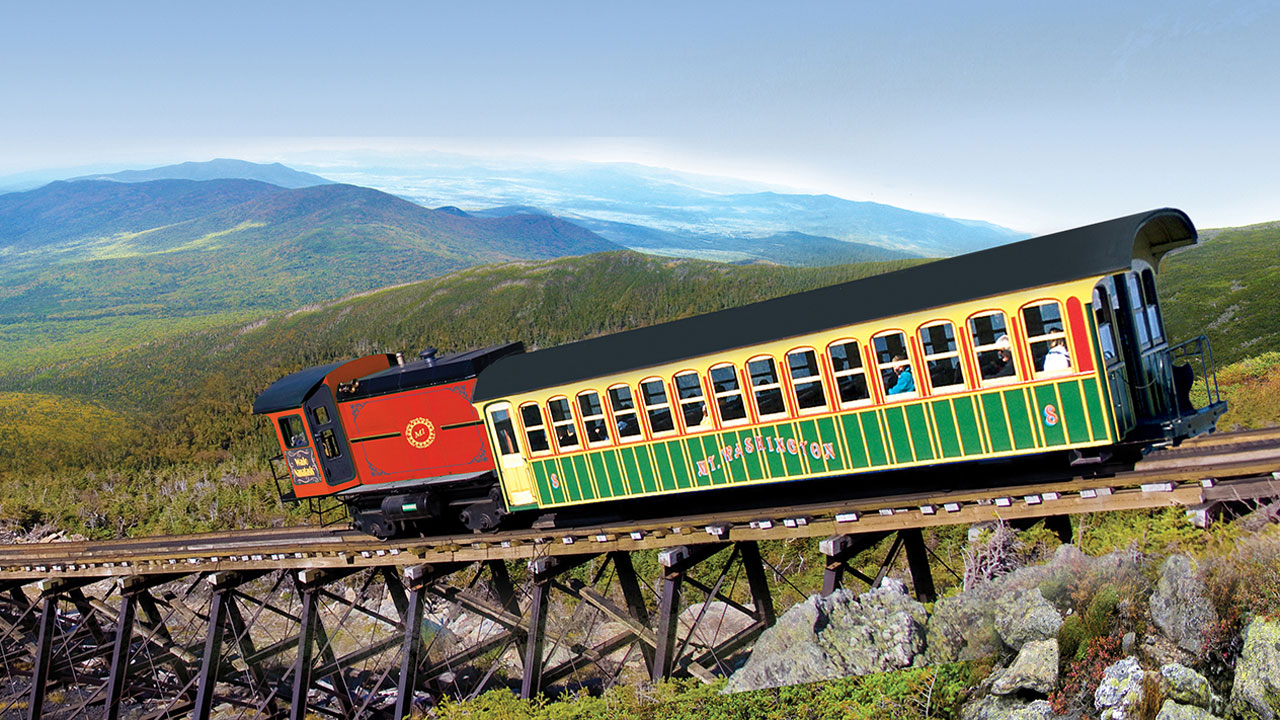
MOUNT WASHINGTON, NH I realize it's ridiculous, but I can't help worrying about it. This cog railway has delivered and returned over five million passengers since its inaugural run up Mount Washington 137 years ago, with only one fatal accident (September 1967; eight passengers dead, 72 injured) in all that time. OSHA must have approved the working conditions for the three crew members: engineer, fireman, and brakeman; the National Transportation Safety Board must have deemed it safe for passengers; and federal regulatory agencies never make mistakes, right? So why am I fixated on the narrow steel ladder running between the rails ahead of us and imagining the worst as the steel cog wheel beneath the locomotive engages it with a shuddering rumble, pulling us up the mountain as it has so many others for generations?

I'll tell you why. Because I have a good imagination and a pessimistic attitude. Also, as a contractor for 34 years, I've lived by Murphy's Law for almost half my life. That little cog wheel is propelling over thirty tons of locomotive and passenger car up an impossibly steep grade of almost 40 degrees. As I understand it, if that wheel should jump out of the ladder track, it's all over; it's Katie, bar the door! All the other wheels are I hate to use the term at the moment freewheeling.

The passenger car is full of leaf-peeping vacationers, including a tour busload of elderly folks from New Jersey. They seem uncertain whether to look out the window at the magnificent view of the barren mountainside or wonder at the Victorian-era technology that's propelling them into the thick gray clouds above. Tom, the brakeman, is jovially shouting over the racket of the steam engine a grimly humorous patter designed to put the nervous at ease. He explains the braking system omitting, I can't help but notice, the limited conditions under which it works.

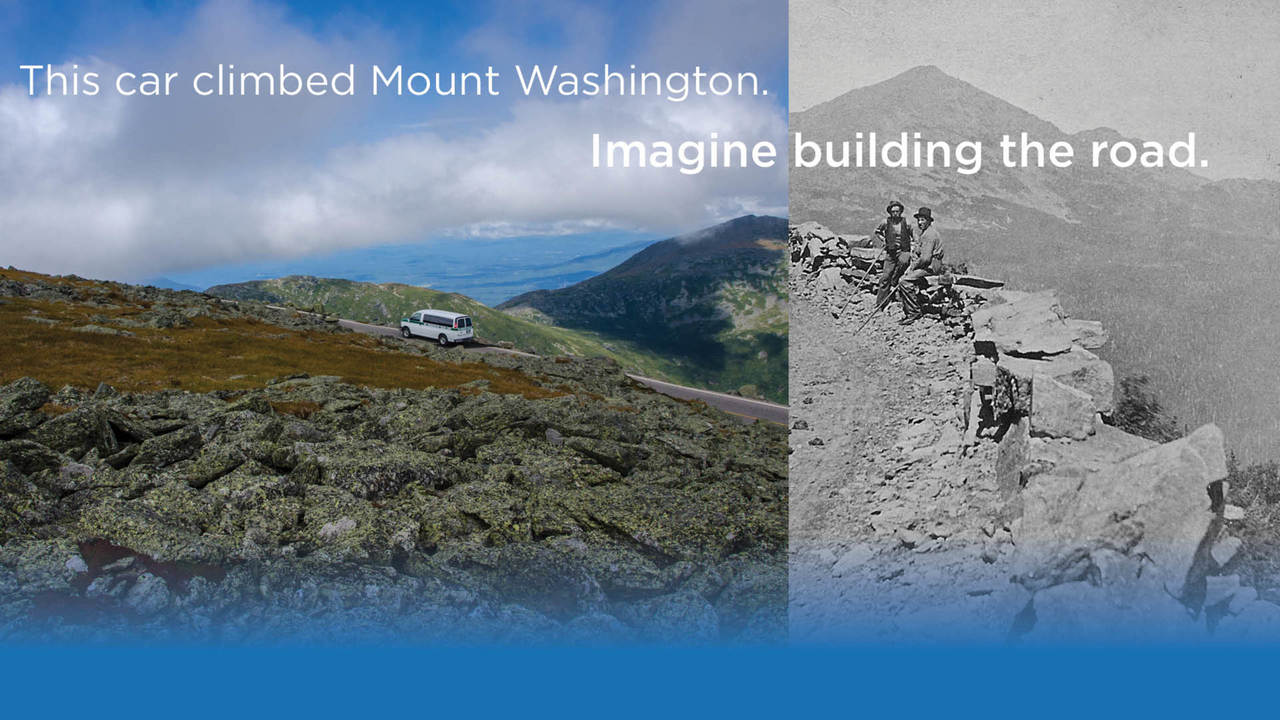
Not many of us remember the Victorian Era. Many of us were raised, though, by parents and grandparents who did. It was an age of tremendous optimism, an industrial age powered by the new marvel of the steam engine: in ships, railways, factories, tractors, and eventually in cars. (The first automobile up Mount Washington was a Stanley Steamer in 1899.) Steam power wasn't very efficient by our current standards it still takes a ton of coal and 1000 gallons of water to propel this little locomotive and its car to the summit but in its day it beat horses and oxen all to pieces.

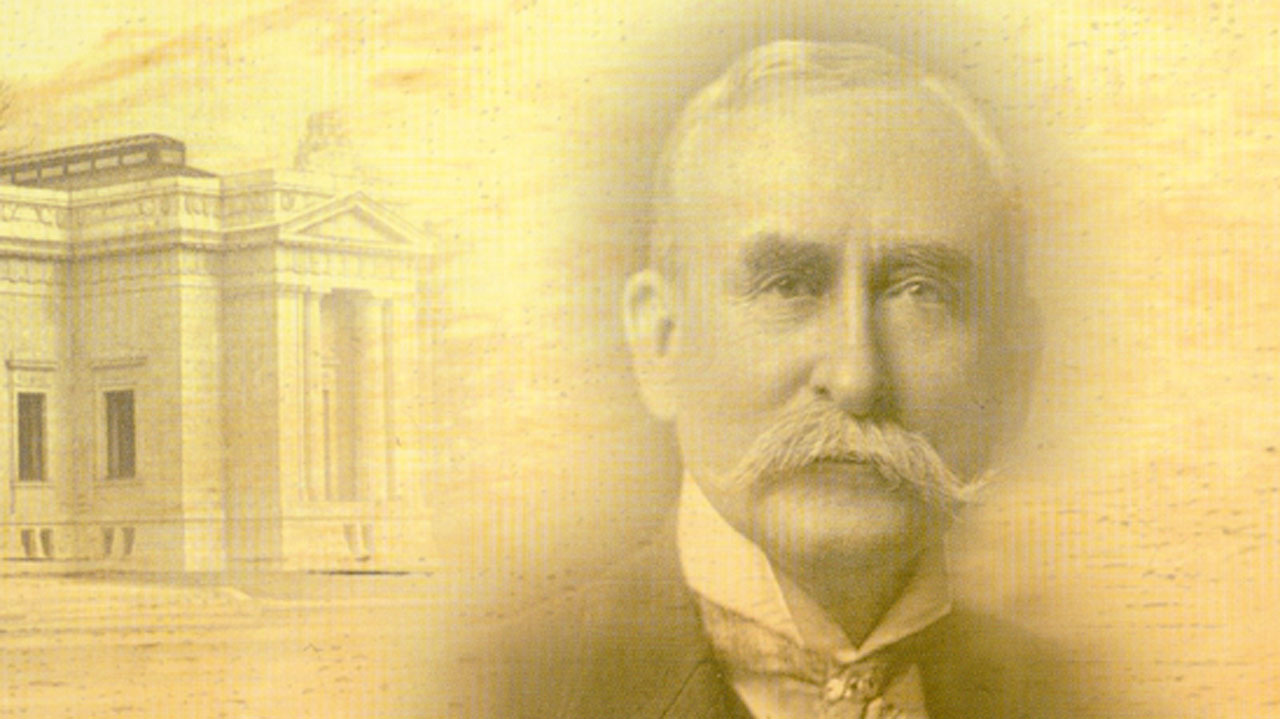
Sylvester Marsh, the inventor of the mountain cog railway, brought this optimism, and considerable personal resources, to the problem of climbing Mount Washington. Originally a farm boy from Campton, New Hampshire, he'd made a tidy fortune in Chicago as a meat packer and grain shipper.A compulsive worker, he had a strongly creative mind, as well, and had, for example, invented a system for drying corn so it could be shipped great distances without the usual spoilage. Retiring to Boston at a fairly early age to spend more time with his family, he found that inactivity was causing him severe gastrointestinal problems what used to be called dyspepsia.

Then, in 1857, on a hiking trip, he and a friend were caught in a terrific storm on Mount Washington and barely managed to make it to the summit house. The story is given out that the experience led him to consider "some easier and safer means of ascension." He obviously knew, however, that the Carriage Road was nearing completion at that time, and that a storm like the one that had nearly killed him and his companion would have stopped a train, as well. I think he just wanted a crack at something that seemed impossible.

For practical reasons, he decided on a self-propelled vehicle, built a working model, and sought a charter from the New Hampshire State Legislature, which seems to have been as progressive then as it is now. He was ridiculed as "Crazy Marsh." But since he was spending his own money and would be employing local labor, he was granted the charter. One legislative wag suggested amending it to include the moon, which seemed as likely a goal as Mount Washington
.
It's impossible now, driving in high-speed comfort to the base of mountain, not to be amazed at the sheer grit, energy, and organization it took to haul the hundreds of tons of steel and machinery by ox cart the 25 miles from the nearest railroad station. But Marsh and his men did it. He invented a system of air brakes to lower both the locomotive and car independently (which it does to this day. The passenger car and locomotive are not attached to each other; the car uses its own brakes to follow the engine down with just a few inches separating their bumpers). By August 1866 Marsh had finished enough track and trestle for a demonstration. A "hundred solid men of New England" came and were impressed. They invested, and the railway went on up the mountain.

Which it's been doing ever since, except for a brief break during World War II, when coal was rationed and we expected German bombers in the sky at any time. The locomotives are geared extremely low; the pistons seem to be doing a hundred, but the wheels roll at a walking pace. Workers on the line hated to come down the mountain so slowly at quitting time, and the company wouldn't pay overtime for it. So the men developed the "slideboard," or "Devil's Shingle," a wooden sled that rode on the center rail and had handles for braking. Most sliders took ten minutes to make the descent. The record is about 2 1/2 minutes better than a 60-mile-per-hour average!

Not all of them made it all the way down. Their adventurous ghosts, I'm sure, still haunt the mountainside mists today, as the sooty little locomotive with the oddly canted boiler chugs past on its way to the summit once again. I don't want to join them, and am ready to jump overboard at the first hint of trouble. I just hope it won't occur on Jacob's Ladder, the 30-foot-high trestle


Support for Windows to the Wild is provided by:


Rath Young Pignatelli The Alice Reen Trust M Schmidt Gerrato THE FULLER FOUNDATION, INC.