Characteristics 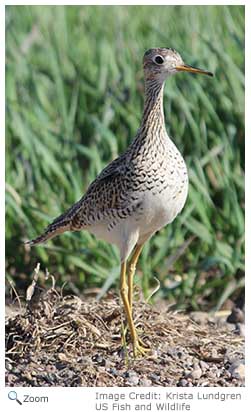
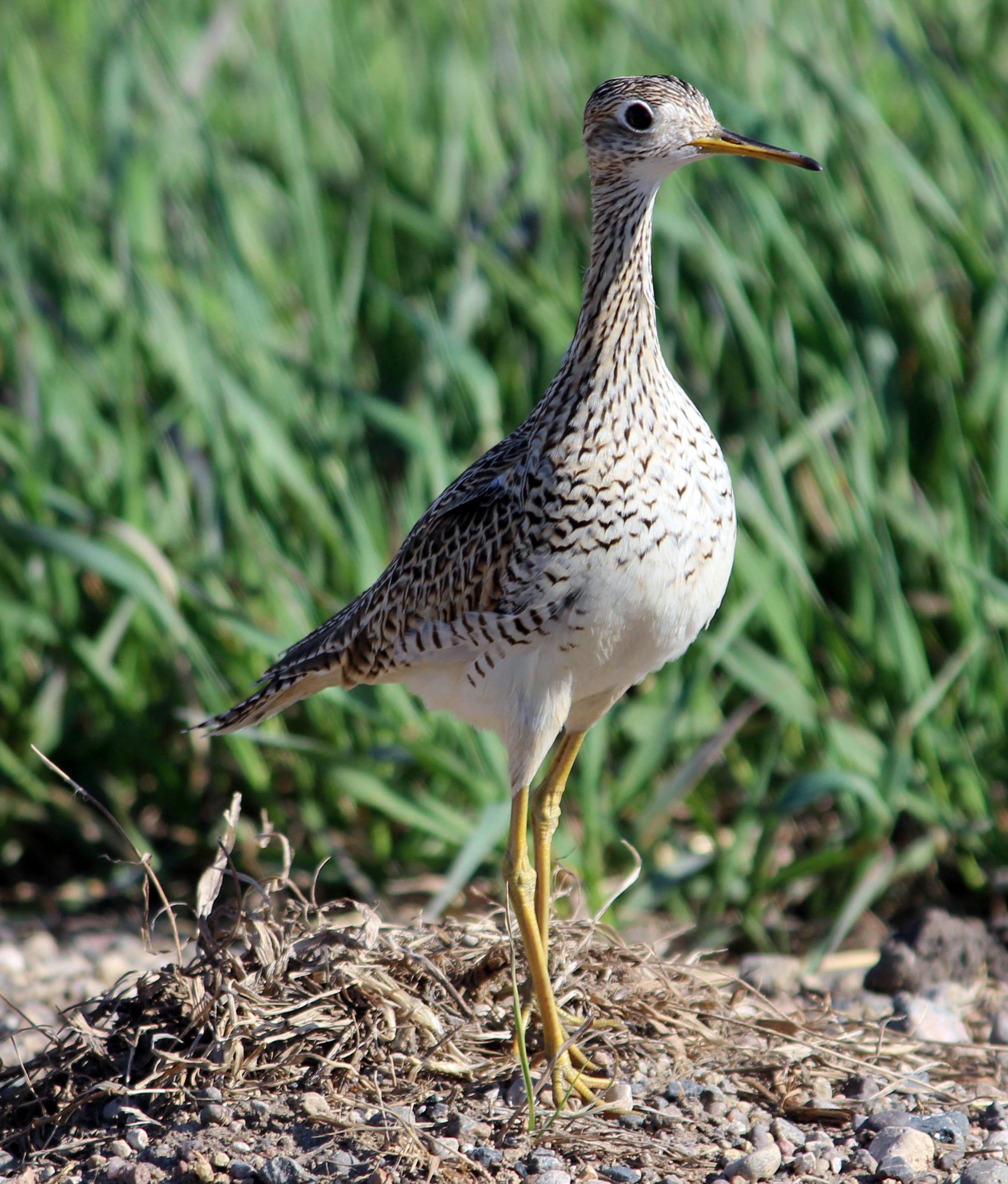
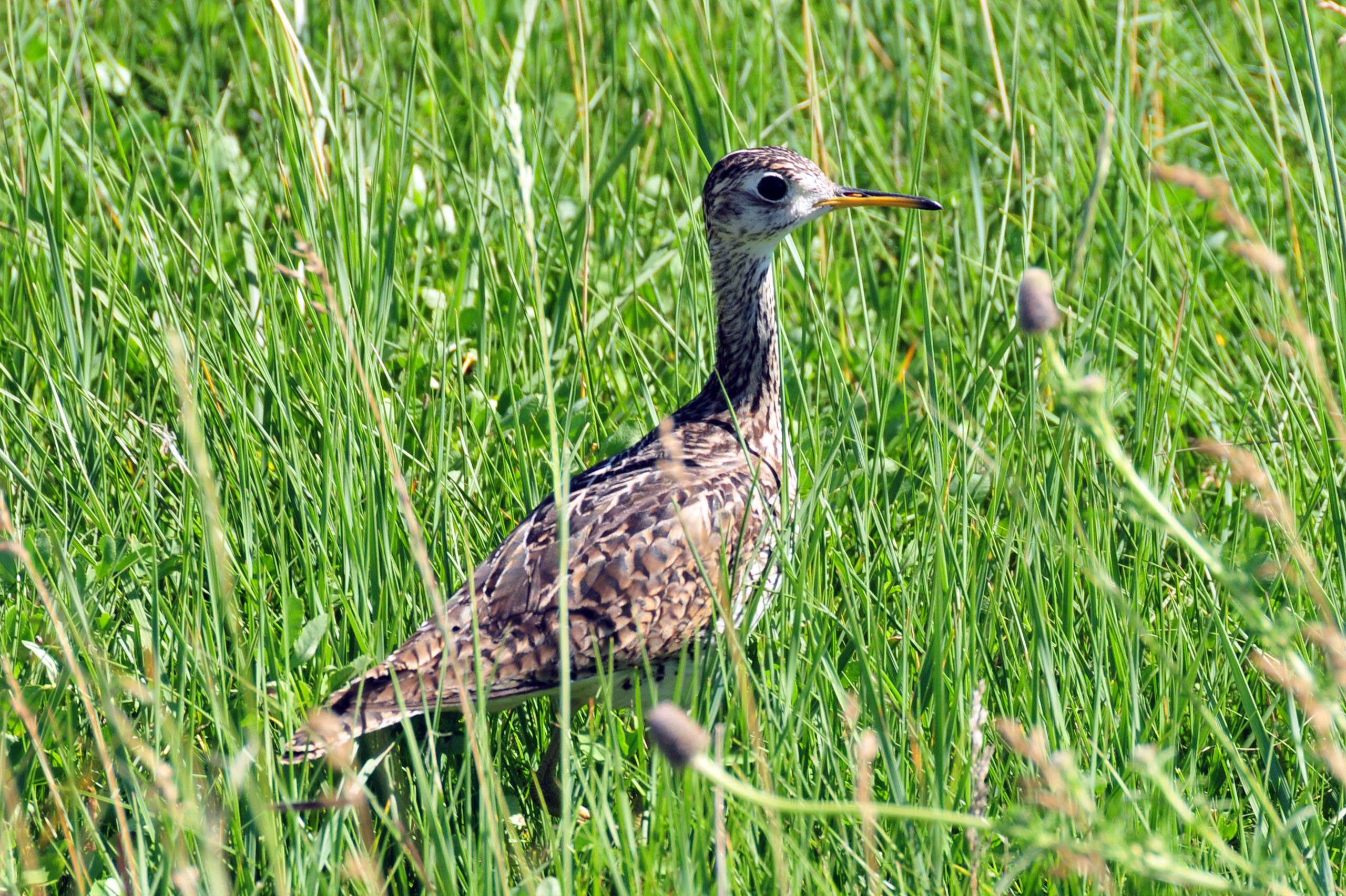
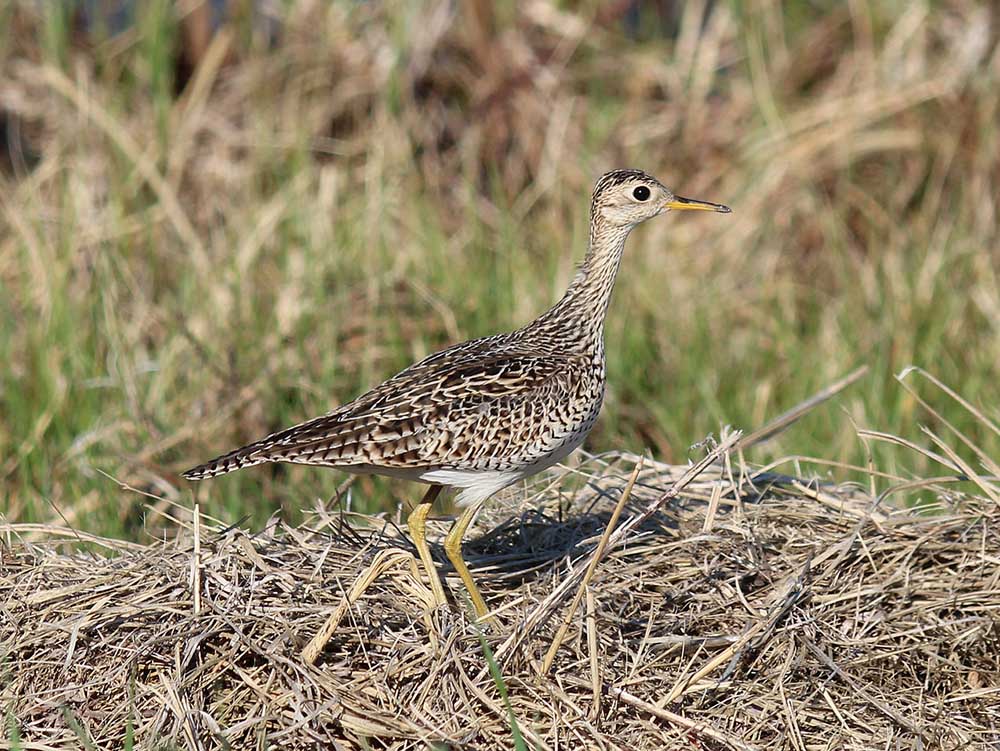
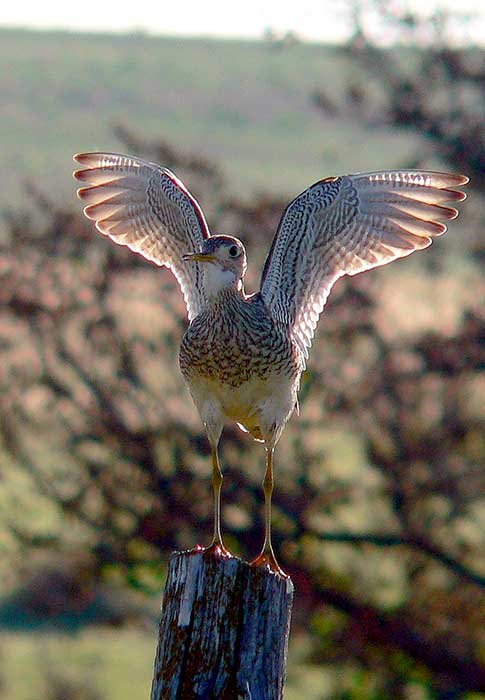
The upland sandpiper is 11-12 inches in length. It has long, yellow legs; long wings; large eyes; a sharp, pointed, black-tipped yellow bill; a small head; and a long neck.
It is speckled brown on top and white with brown spots and bars on its chest and belly. The upland sandpiper is also called the grass plover and the upland plover.
Range
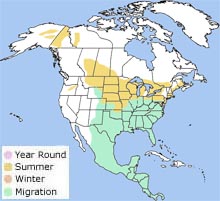 The upland sandpiper breeds from Alaska east to New Brunswick, Canada and south to northeastern Oregon, Oklahoma and Virginia. It winters on the pampas (prairie) of southern South America from Brazil to Argentina. The upland sandpiper breeds from Alaska east to New Brunswick, Canada and south to northeastern Oregon, Oklahoma and Virginia. It winters on the pampas (prairie) of southern South America from Brazil to Argentina.
Habitat
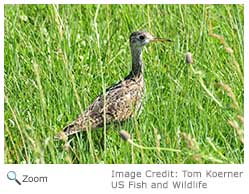 Unlike other sandpipers and plovers, the upland sandpiper prefers dry grasslands over wetlands. It is sometimes called the "shorebird of the prairie." It lives on open prairies, grasslands, pastures, wet meadows and hayfields. Its numbers have sharply declined since the late 1800's due to hunting and habitat loss. Unlike other sandpipers and plovers, the upland sandpiper prefers dry grasslands over wetlands. It is sometimes called the "shorebird of the prairie." It lives on open prairies, grasslands, pastures, wet meadows and hayfields. Its numbers have sharply declined since the late 1800's due to hunting and habitat loss.
|
|
Diet
The upland sandpiper eats a wide variety of invertebrates including grasshoppers, crickets, weevils, beetles, moths, ants, flies, bugs, centipedes, millipedes, spiders, snails and earthworms. It also eats some grains and seeds.
Life Cycle
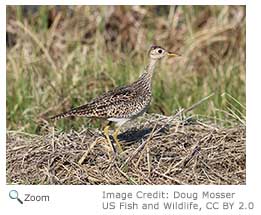 The upland sandpiper reaches its breeding grounds in late April or early May. During courtship, the male circles over the breeding ground and calls out with a whistling song. The upland sandpiper reaches its breeding grounds in late April or early May. During courtship, the male circles over the breeding ground and calls out with a whistling song.
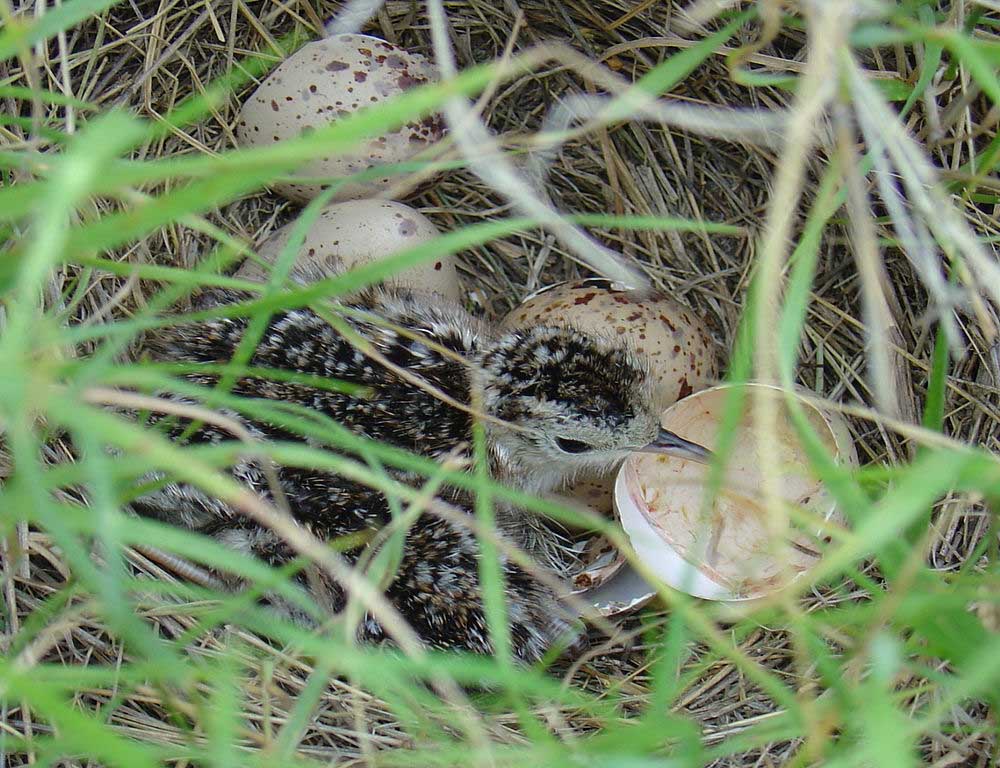
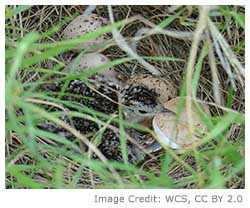 Both the male and female create a nesting spot by scraping out a depression in the ground. The nest is made under a bush or in a clump of grass. Sometimes grass is pulled down over the nest to help hide it. The female lays 4 eggs, and both the male and the female incubate the eggs. The chicks hatch in 21-27 days and fledge in about a month. The chicks are precocial and start hunting insects shortly after birth. Both the male and female create a nesting spot by scraping out a depression in the ground. The nest is made under a bush or in a clump of grass. Sometimes grass is pulled down over the nest to help hide it. The female lays 4 eggs, and both the male and the female incubate the eggs. The chicks hatch in 21-27 days and fledge in about a month. The chicks are precocial and start hunting insects shortly after birth.
Behavior
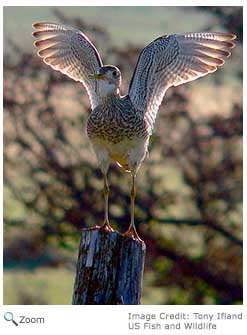 The upland sandpiper often perches on
fence posts, stumps or telephone poles. When frightened, it runs a
short distance and then freezes in an attempt to blend into its background. The upland sandpiper often perches on
fence posts, stumps or telephone poles. When frightened, it runs a
short distance and then freezes in an attempt to blend into its background.
|