Characteristics
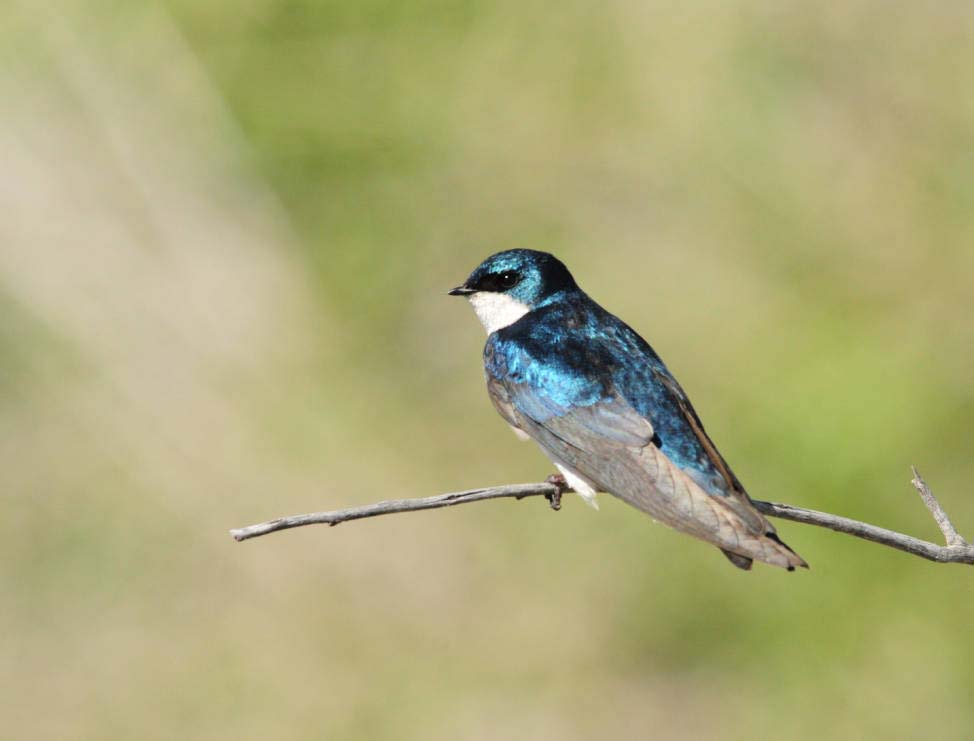
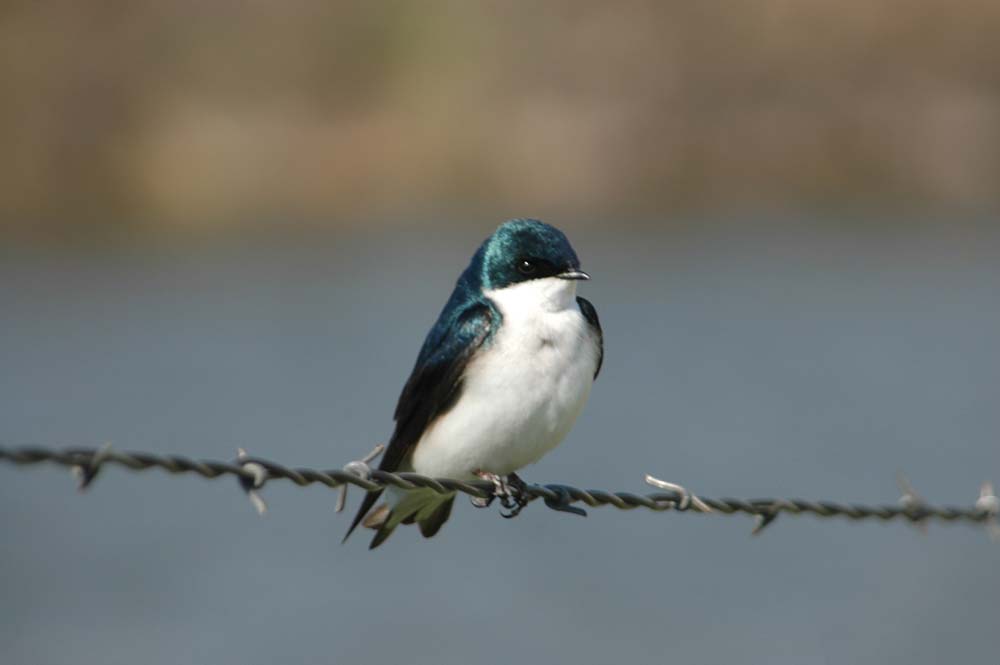
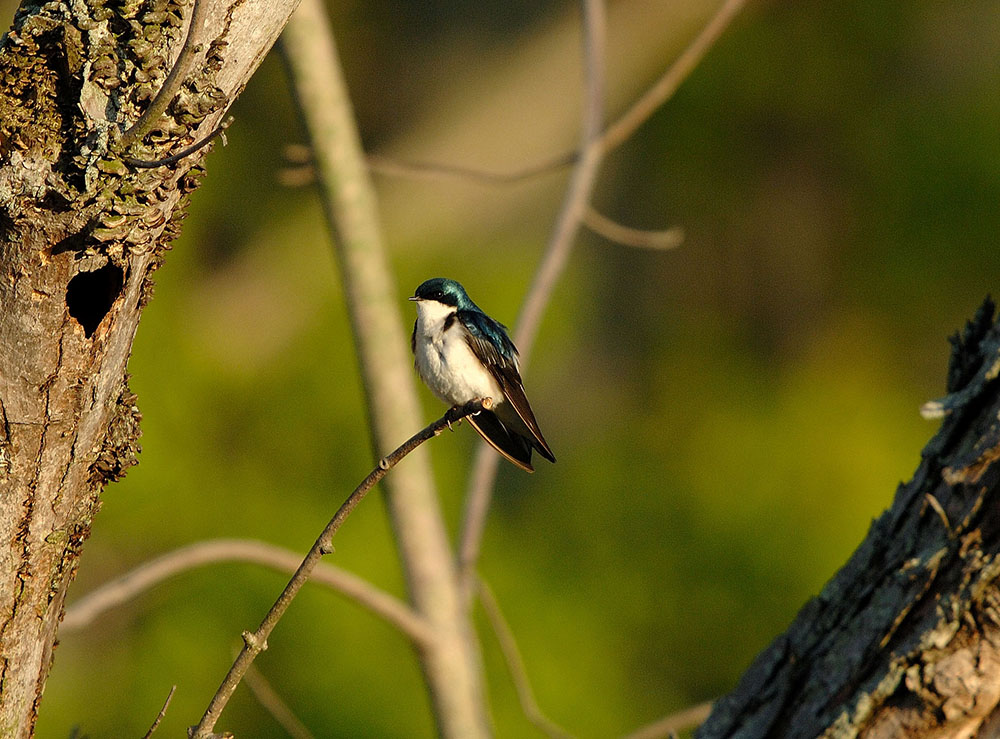
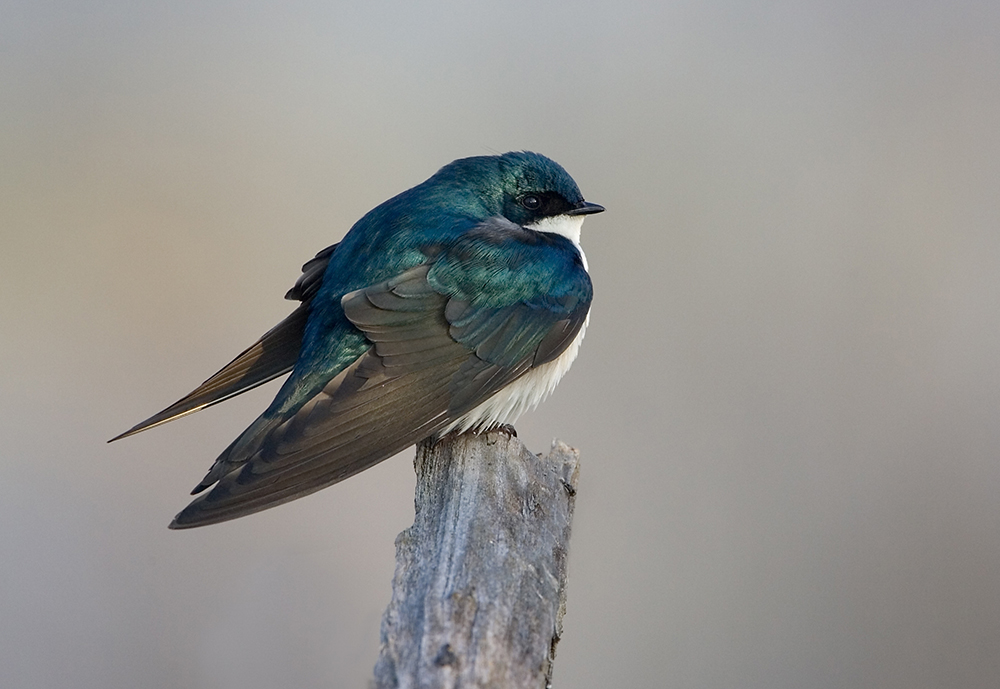
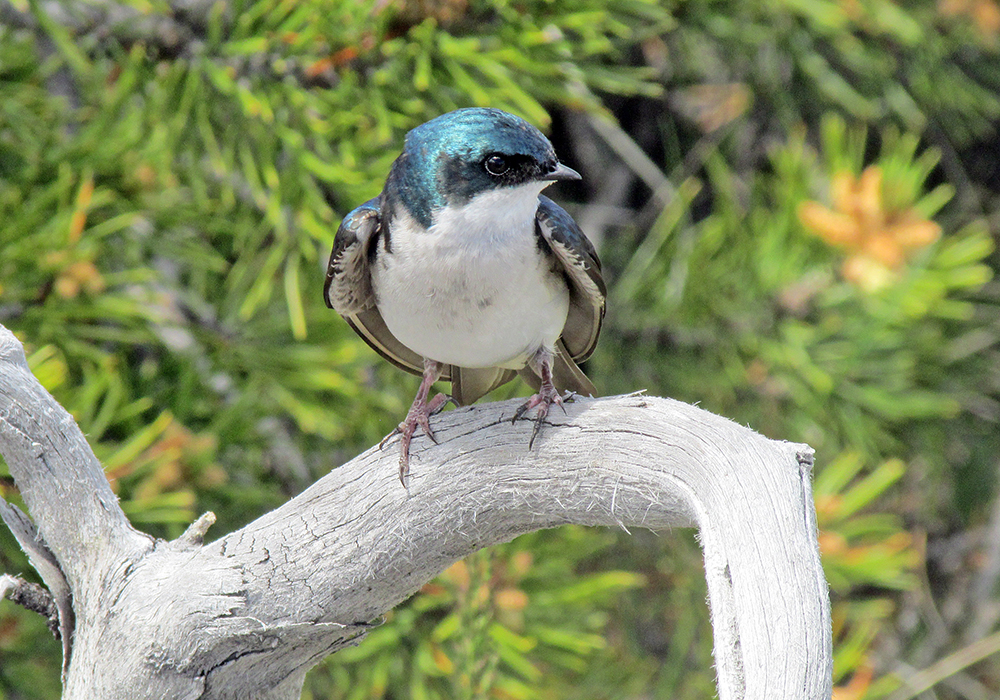
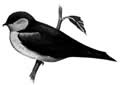
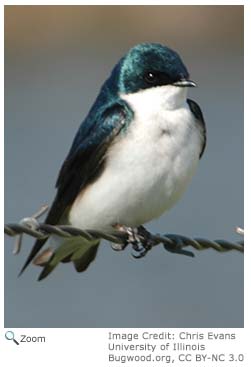 The tree swallow is about five inches long. It has a forked tail; a metallic green to blue head, back, and wing feathers; and white feathers on its breast and belly. It has a small black bill, dark brown eyes, and light brown legs and feet. Females are duller in color than males and their foreheads may be a brownish color. The tree swallow is about five inches long. It has a forked tail; a metallic green to blue head, back, and wing feathers; and white feathers on its breast and belly. It has a small black bill, dark brown eyes, and light brown legs and feet. Females are duller in color than males and their foreheads may be a brownish color.
Range
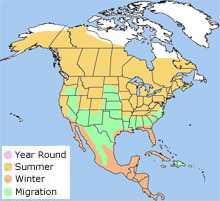 In North America the tree swallow breeds from Alaska east to Newfoundland, Canada and south to California, Colorado, Nebraska and Maryland. It winters north to southern California, the Gulf Coast and the Carolinas. In North America the tree swallow breeds from Alaska east to Newfoundland, Canada and south to California, Colorado, Nebraska and Maryland. It winters north to southern California, the Gulf Coast and the Carolinas.
Habitat
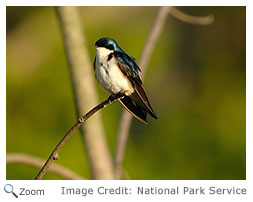 The tree swallow can be found in wet habitats like flooded meadows, marshes, lakeshores, streams, and open areas near woods. The tree swallow can be found in wet habitats like flooded meadows, marshes, lakeshores, streams, and open areas near woods.
|
|
Diet
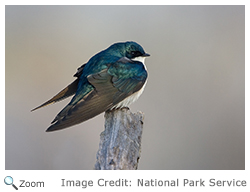 The tree swallow eats flying insects like beetles, horseflies, moths, grasshoppers, and dragonflies. They search for insects over land and water and catch their prey in the air. In the winter, they may feed on berries. The tree swallow eats flying insects like beetles, horseflies, moths, grasshoppers, and dragonflies. They search for insects over land and water and catch their prey in the air. In the winter, they may feed on berries.
Life Cycle 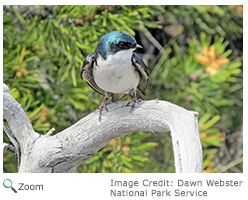 Males arrive at the breeding territory a week before the females. Once the females arrive, breeding pairs will form. Male and female pairs will defend their nesting territory. A pair will have more than one nesting site, usually in a tree cavity, in their territory, but they will use only one site for their eggs. Males arrive at the breeding territory a week before the females. Once the females arrive, breeding pairs will form. Male and female pairs will defend their nesting territory. A pair will have more than one nesting site, usually in a tree cavity, in their territory, but they will use only one site for their eggs.
The female builds a cup-shaped nest using grass or pine needles. Both the male and the collect feathers to line the nest. The female tree swallow lays four to six eggs at a rate of one egg per day. The female incubates the eggs and the male guards the nesting site. The eggs hatch in about two weeks. Both the male and the female feed the chicks. The chicks fledge in about three weeks.
Behavior
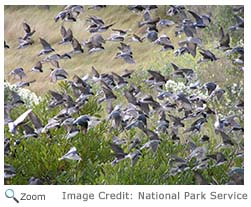 Tree swallows are short-distance migrators. They gather in large flocks in the fall. They are the first swallows to reappear in the spring. Tree swallows are short-distance migrators. They gather in large flocks in the fall. They are the first swallows to reappear in the spring.
|


 Characteristics