Characteristics
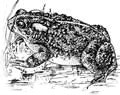
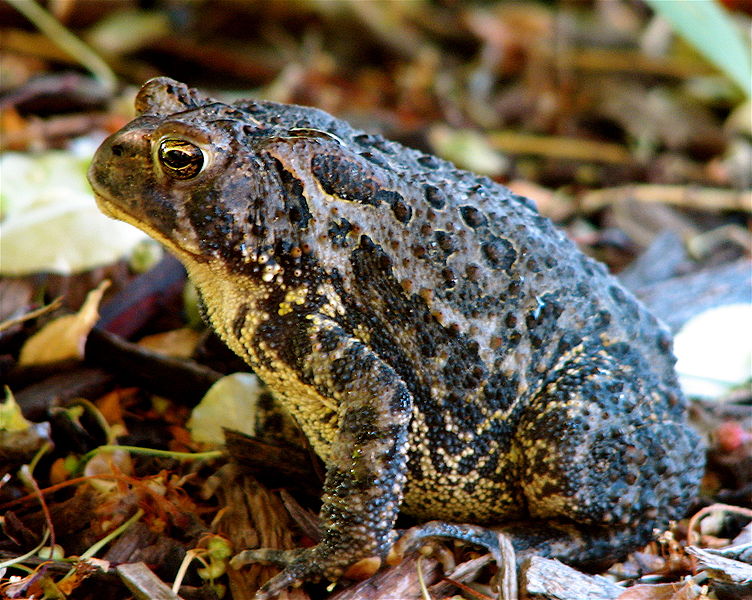
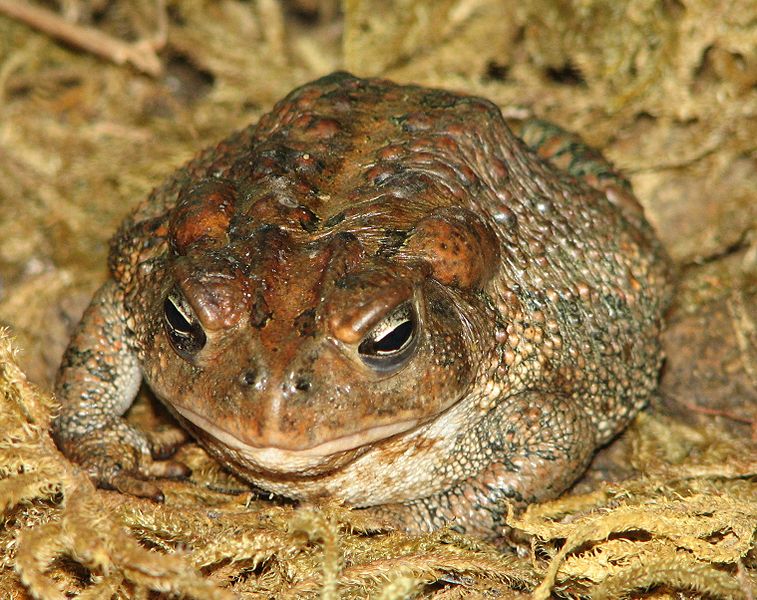
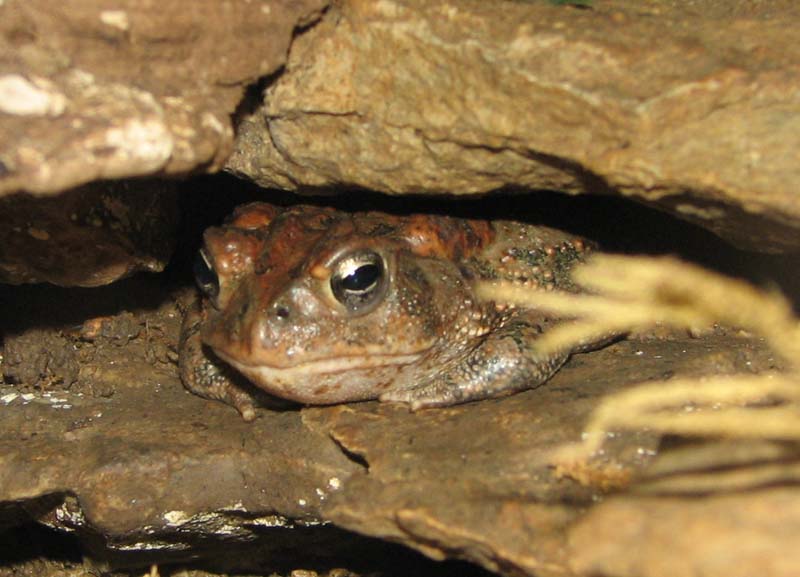
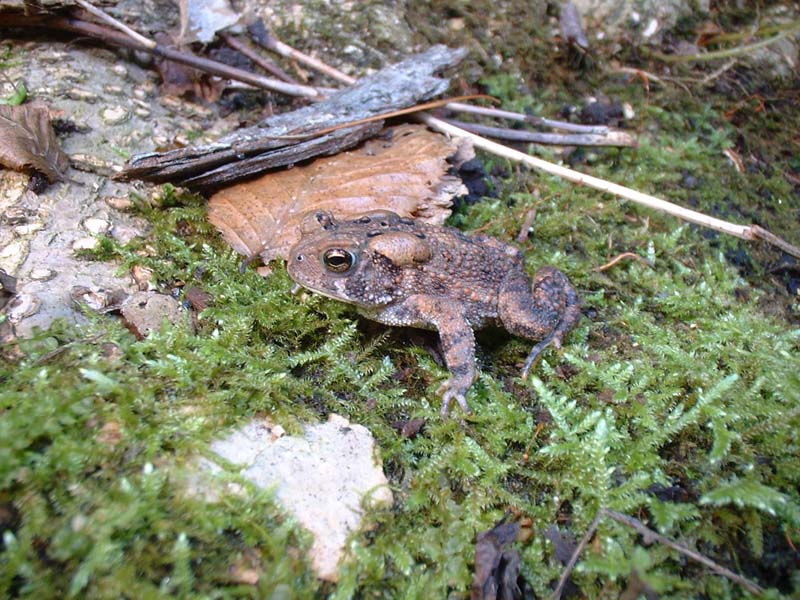
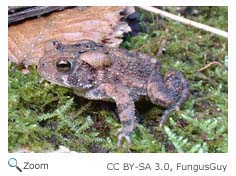
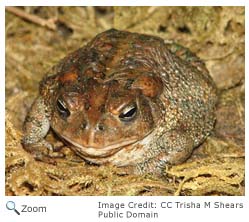 The American toad, sometimes called the hop toad, is 2-4½ inches in length. It can vary in color from tan, brown, reddish-brown, or olive green. The American toad, sometimes called the hop toad, is 2-4½ inches in length. It can vary in color from tan, brown, reddish-brown, or olive green.
Some American toads are solid in color, but others may be patterned. It has a light white to yellow belly that usually has black or gray spots on it. It has dark round spots on its back with one or two warts in each spot. Its skin contains glands that produce a white toxin that helps protect the toad from predators. Some American toads have a stripe down the middle of their backs. Males are usually smaller than females and may have a dark throat.
Range
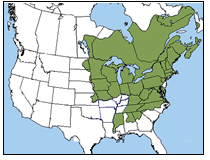 The American toad is found in most areas of eastern Canada and the United States. In Canada, it is found from southeast Manitoba to Labrador. In the United States, it is found from Minnesota east to New England and south to northeastern Louisiana, western Mississippi, northern Alabama and Georgia, and western North and South Carolina. The American toad is found in most areas of eastern Canada and the United States. In Canada, it is found from southeast Manitoba to Labrador. In the United States, it is found from Minnesota east to New England and south to northeastern Louisiana, western Mississippi, northern Alabama and Georgia, and western North and South Carolina.
Habitat
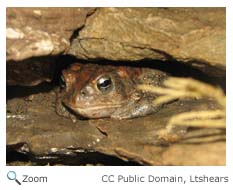 The American toad is found in areas with lots of moisture and plenty of insects. It is often found in parks, yards, farmland, prairies, mountain areas, and forests. The American toad is found in areas with lots of moisture and plenty of insects. It is often found in parks, yards, farmland, prairies, mountain areas, and forests. |
|
|
Diet
The American toad uses its tongue to snap up insects. It may also eat spiders, earthworms, slugs, and other invertebrates.
Life Cycle
 The American toad mates from March to July, depending on the latitude. Males go to shallow breeding ponds and call out to attract females with a distinctive high-pitched musical trill that can last for up to 30 seconds. When the female arrives at the breeding pond, the male grabs her until she discharges her eggs. The male then fertilizes the eggs by discharging fluid with sperm in it onto the eggs. The American toad mates from March to July, depending on the latitude. Males go to shallow breeding ponds and call out to attract females with a distinctive high-pitched musical trill that can last for up to 30 seconds. When the female arrives at the breeding pond, the male grabs her until she discharges her eggs. The male then fertilizes the eggs by discharging fluid with sperm in it onto the eggs.
The eggs are encased in long spiral tubes of a jelly-like substance. They are laid in two separate strings with thousands of eggs in each string. The eggs are placed on submerged vegetation in shallow water. The tadpoles hatch in 3-12 days and become toads in 50-65 days. American toads usually survive only a year or two in the wild. Most tadpoles don't even survive long enough to become toads.
Behavior
The American toad is usually nocturnal. It spends daylight hours under cover. When cold weather arrives, it burrows into the ground and hibernates.
Toads don't cause warts, but the American toad produces a toxin in glands behind its eyes that can be harmful if swallowed, or if it gets in your eyes. The toxin protects it from some predators. For predators that aren't affected by the toxin, the American toad puffs itself up so that it looks bigger!
|