What Are Grasslands?
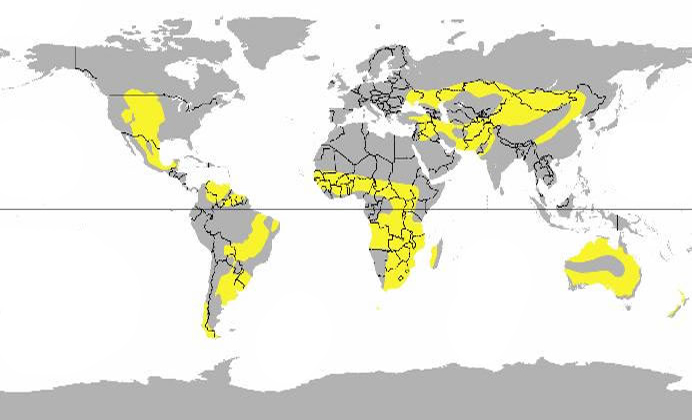
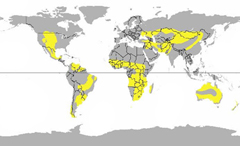 Grasslands cover one fourth of the Earth's land and can be found on every continent, except for Antarctica. Grasslands occur where it is too wet for
deserts but too dry for forests. Grasslands get about 10 to 24 inches
of precipitation per year, although some tropical grasslands can get over
40 inches of rain a year. Grasslands cover one fourth of the Earth's land and can be found on every continent, except for Antarctica. Grasslands occur where it is too wet for
deserts but too dry for forests. Grasslands get about 10 to 24 inches
of precipitation per year, although some tropical grasslands can get over
40 inches of rain a year.
Tropical Grasslands
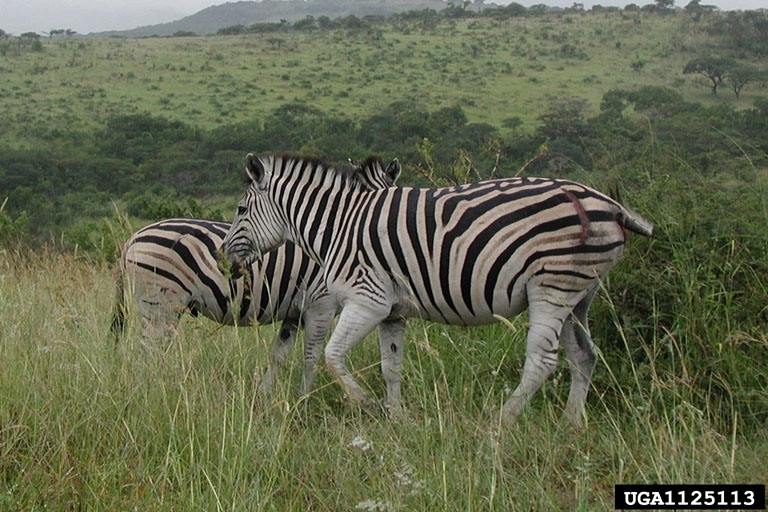
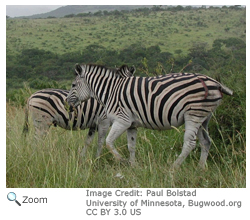 Tropical grasslands are close to the equator and are hot all year long. The grasslands in Africa are called savannas or veldts and are home to animals like zebras, lions and ostriches. Tropical grasslands are close to the equator and are hot all year long. The grasslands in Africa are called savannas or veldts and are home to animals like zebras, lions and ostriches.
Temperate Grasslands
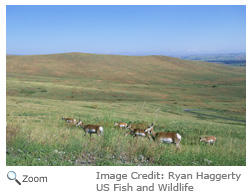 Temperate grasslands are hot in the summer and cold in the winter. In Europe and Asia, temperate grasslands are called steppes. In South America grasslands are called pampas. In North America temperate grasslands are called prairies. Temperate grasslands are hot in the summer and cold in the winter. In Europe and Asia, temperate grasslands are called steppes. In South America grasslands are called pampas. In North America temperate grasslands are called prairies.
The
Prairie
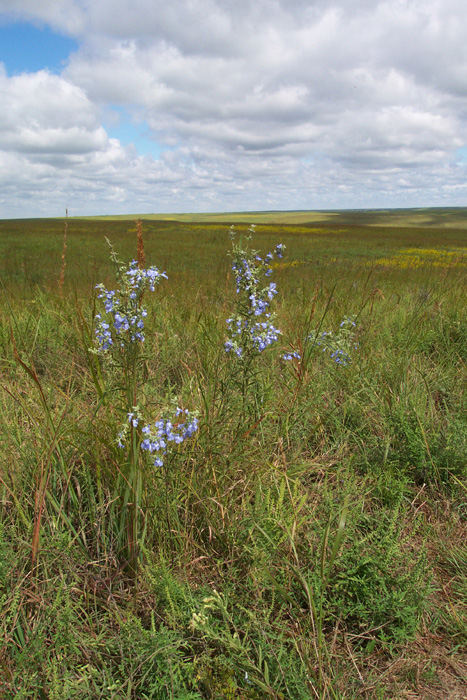
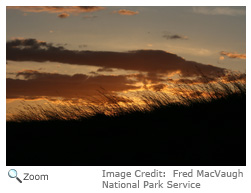 The soil in prairies is excellent for growing crops and much of the grassland in North America has been turned into farms and ranches. The combination of high summer temperatures, strong winds and little rain makes prairies vulnerable to fire. Fire keeps trees from growing on the prairie, but grasses and other prairie plants can survive fire and even thrive! There are three types of prairies: tall grass, mixed grass and short grass. The soil in prairies is excellent for growing crops and much of the grassland in North America has been turned into farms and ranches. The combination of high summer temperatures, strong winds and little rain makes prairies vulnerable to fire. Fire keeps trees from growing on the prairie, but grasses and other prairie plants can survive fire and even thrive! There are three types of prairies: tall grass, mixed grass and short grass.
|
|
Tall Grass Prairies
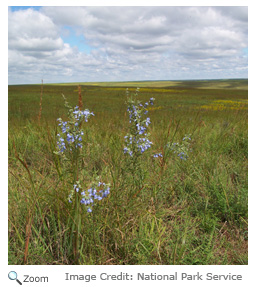 Tall grass prairies get the most rain, about 30 inches a year. They have tall grasses, sunflowers and other plants. Grasses in this type of prairie can grow as high as five feet. Tall grass prairies are found in the eastern part of the Midwest. Tall grass prairies get the most rain, about 30 inches a year. They have tall grasses, sunflowers and other plants. Grasses in this type of prairie can grow as high as five feet. Tall grass prairies are found in the eastern part of the Midwest.
Mixed Grass Prairies
Mixed grass prairies are found in the middle of the Midwest. They get less rain than tall grass prairies, between 15 and 20 inches a year, and the vegetation grows to about three feet tall.
Short Grass Prairies
Short grass prairies get the least amount of rain, less than 10 inches a year. They are found in the western part of the Midwest. Grass in short grass prairies is usually under two feet tall.
Living in the Prairie
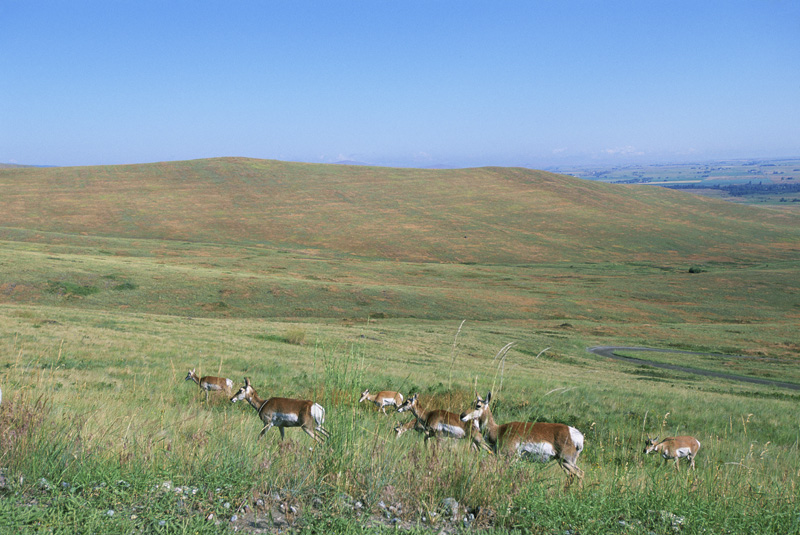
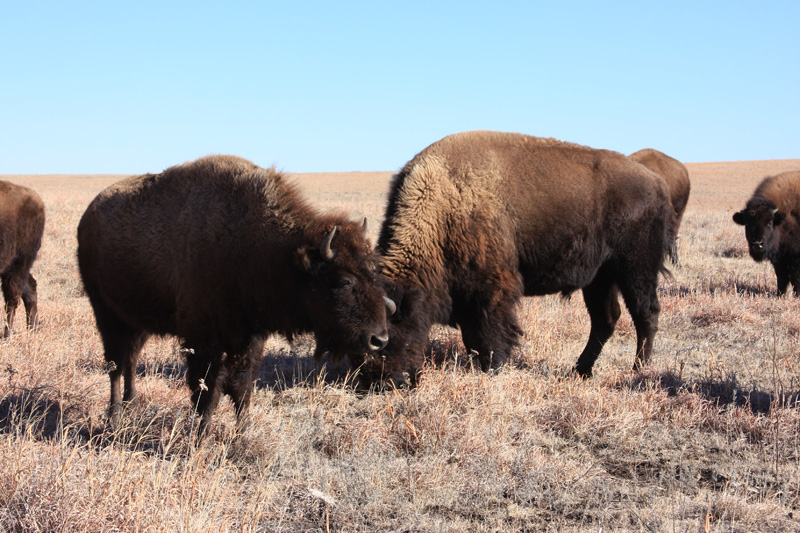
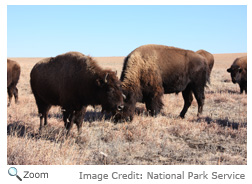 Some animals that live in the prairie like the American bison are grazers. Others like the black-tailed prairie dog and the American badger are burrowers and spend a lot of time underground. Other animals like the coyote prey on smaller prairie animals. The prairie has lots of insects like crickets, caterpillars and grasshoppers and is home to insect-eating birds like the western meadowlark and the killdeer. Some animals that live in the prairie like the American bison are grazers. Others like the black-tailed prairie dog and the American badger are burrowers and spend a lot of time underground. Other animals like the coyote prey on smaller prairie animals. The prairie has lots of insects like crickets, caterpillars and grasshoppers and is home to insect-eating birds like the western meadowlark and the killdeer.
|