Characteristics
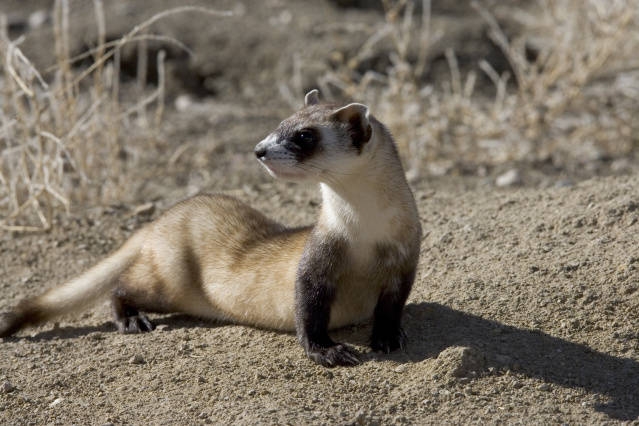
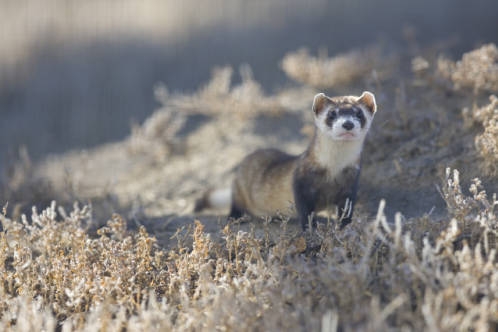
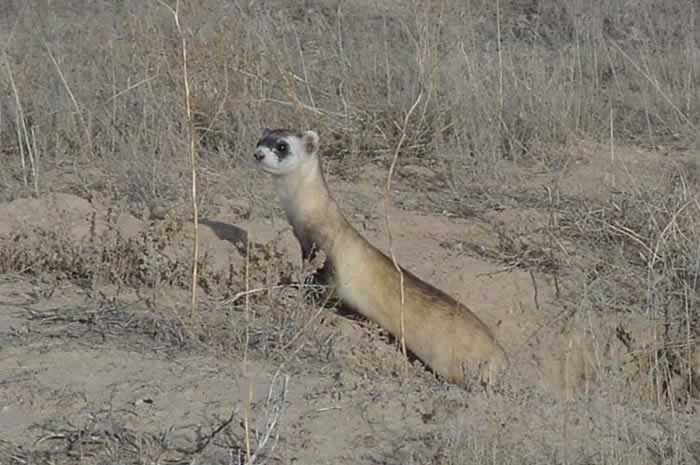
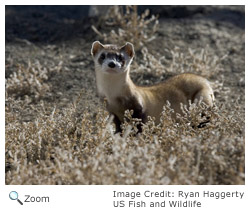 The black-footed ferret is a member of the mustelidae or weasel family. It has a long body and yellowish-brown fur with a blackish wash of fur on its back. It is about two feet in length and weighs 2 to 3 pounds. The black-footed ferret is a member of the mustelidae or weasel family. It has a long body and yellowish-brown fur with a blackish wash of fur on its back. It is about two feet in length and weighs 2 to 3 pounds.
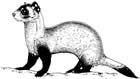
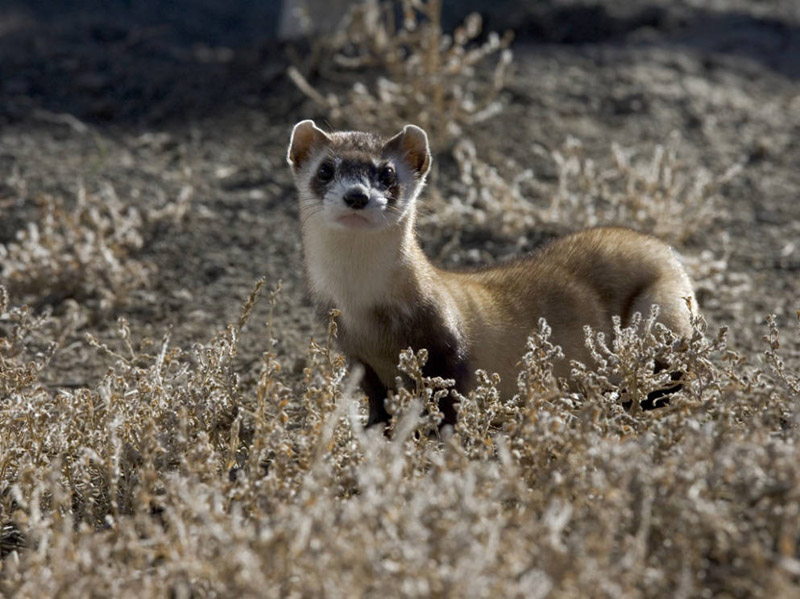
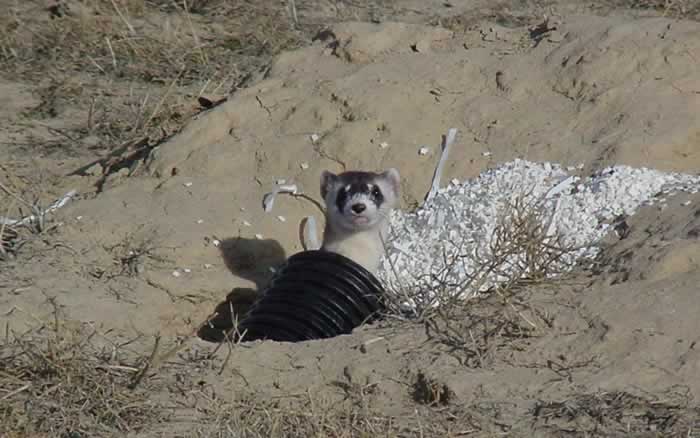
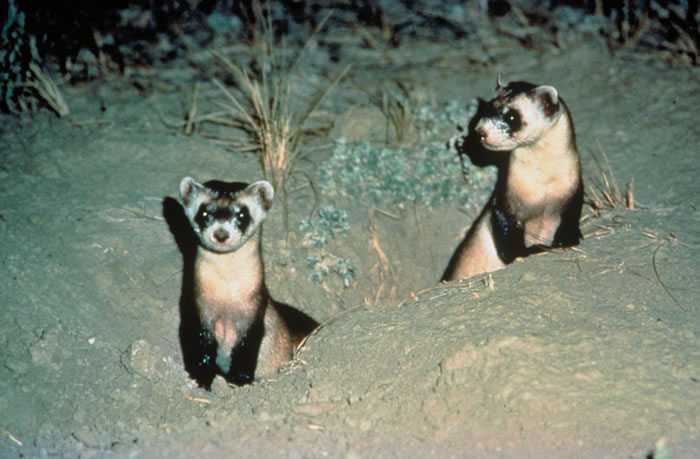
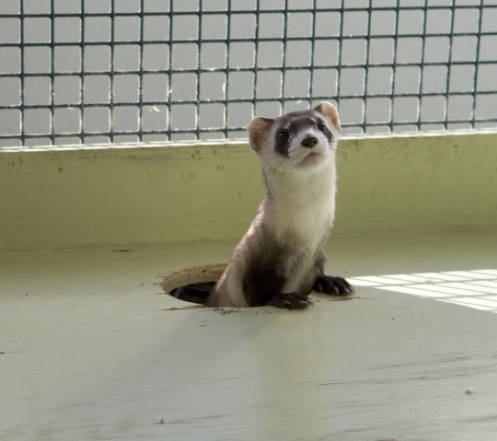
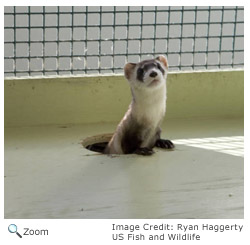
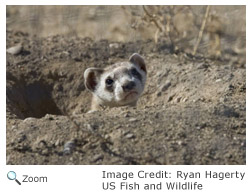 It has a black-tipped tail and black feet with long claws. It has a black mask around its eyes; large, rounded ears on the side of its triangular head; a white muzzle, forehead, and throat; and a black nose. Males are larger than females. The black-footed ferret is the only ferret native to North America. The European polecat and the steppe or Siberian polecat are its closest living relatives in the wild. It has a black-tipped tail and black feet with long claws. It has a black mask around its eyes; large, rounded ears on the side of its triangular head; a white muzzle, forehead, and throat; and a black nose. Males are larger than females. The black-footed ferret is the only ferret native to North America. The European polecat and the steppe or Siberian polecat are its closest living relatives in the wild.
Range
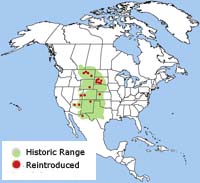 The black-footed ferret was once found throughout the eastern and southern Rocky Mountains and the Great Plains. It is currently found in Montana, South Dakota, Utah, Colorado, Kansas, Arizona, New Mexico, and Chihuahua, Mexico. The black-footed ferret was once found throughout the eastern and southern Rocky Mountains and the Great Plains. It is currently found in Montana, South Dakota, Utah, Colorado, Kansas, Arizona, New Mexico, and Chihuahua, Mexico.
Habitat
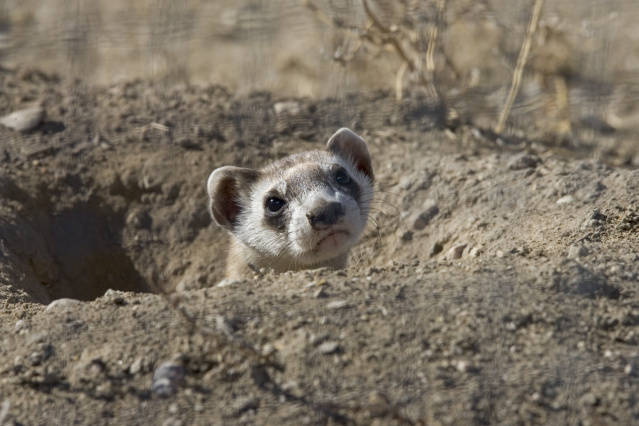
The black-footed Ferret is found in short or middle grass prairies. It often makes its homes in abandoned prairie dog burrows.
Diet
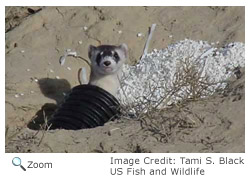 The black-footed ferret eats prairie dogs. It slithers down prairie dog tunnels and kills the prairie dog with a quick bite to the back of the neck. If it can't find prairie dogs, it eats other small mammals like mice, gophers, and ground squirrels. It may also eat birds, eggs, and small reptiles. The black-footed ferret eats prairie dogs. It slithers down prairie dog tunnels and kills the prairie dog with a quick bite to the back of the neck. If it can't find prairie dogs, it eats other small mammals like mice, gophers, and ground squirrels. It may also eat birds, eggs, and small reptiles.
|
| |
Life Cycle
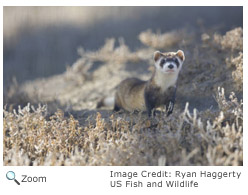 The black-footed ferret mates in March and April. The female has a litter of 3-5 young in a burrow in the ground 41 days after mating. The female nurses and cares for the young. The young are born blind and helpless and are covered with a fine white fur. They develop markings when they are about three weeks old and open their eyes when they are about a month old. The young come above ground when they are about 42 days old. The young stay with their mother until the fall. The black-footed ferret mates in March and April. The female has a litter of 3-5 young in a burrow in the ground 41 days after mating. The female nurses and cares for the young. The young are born blind and helpless and are covered with a fine white fur. They develop markings when they are about three weeks old and open their eyes when they are about a month old. The young come above ground when they are about 42 days old. The young stay with their mother until the fall.
Behavior
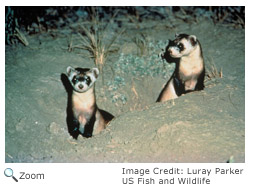 Except for during the breeding season, the black-footed ferret is a solitary animal. It is mostly nocturnal and spends most of its time underground. The black-footed ferret is very vocal and hisses, chatters, and whimpers. It is also very playful and and young black-footed ferrets often wrestle with each other! Except for during the breeding season, the black-footed ferret is a solitary animal. It is mostly nocturnal and spends most of its time underground. The black-footed ferret is very vocal and hisses, chatters, and whimpers. It is also very playful and and young black-footed ferrets often wrestle with each other!
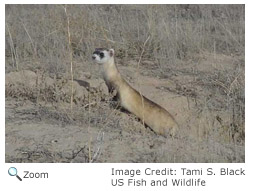 The black-footed Ferret is on the U.S. Endangered Species List. It is the most endangered mammal in North America. The destruction of prairie dog towns and loss of habitat has severely impacted the black-footed ferret population. Predation and disease have also impacted black-footed ferret populations. The black-footed Ferret is on the U.S. Endangered Species List. It is the most endangered mammal in North America. The destruction of prairie dog towns and loss of habitat has severely impacted the black-footed ferret population. Predation and disease have also impacted black-footed ferret populations.
 The black-footed ferret was first identified in 1851. As prairie dog populations decreased in the 20th century, black-footed ferret populations also decreased. Biologists thought the black-footed ferret was extinct in 1976 when the last known colony in South Dakota disappeared. In 1981, a group of about 100 black-footed ferrets was found near Meeteetse, Wyoming. All but 18 of those black-footed ferrets died of distemper. The remaining ferrets were captured and bred in captivity, and since 1991 ferrets descended from that original group have been released in the wild in Arizona, Colorado, Montana, South Dakota, Utah, and Wyoming in an effort to reestablish the population in the wild. The black-footed ferret was first identified in 1851. As prairie dog populations decreased in the 20th century, black-footed ferret populations also decreased. Biologists thought the black-footed ferret was extinct in 1976 when the last known colony in South Dakota disappeared. In 1981, a group of about 100 black-footed ferrets was found near Meeteetse, Wyoming. All but 18 of those black-footed ferrets died of distemper. The remaining ferrets were captured and bred in captivity, and since 1991 ferrets descended from that original group have been released in the wild in Arizona, Colorado, Montana, South Dakota, Utah, and Wyoming in an effort to reestablish the population in the wild.
|