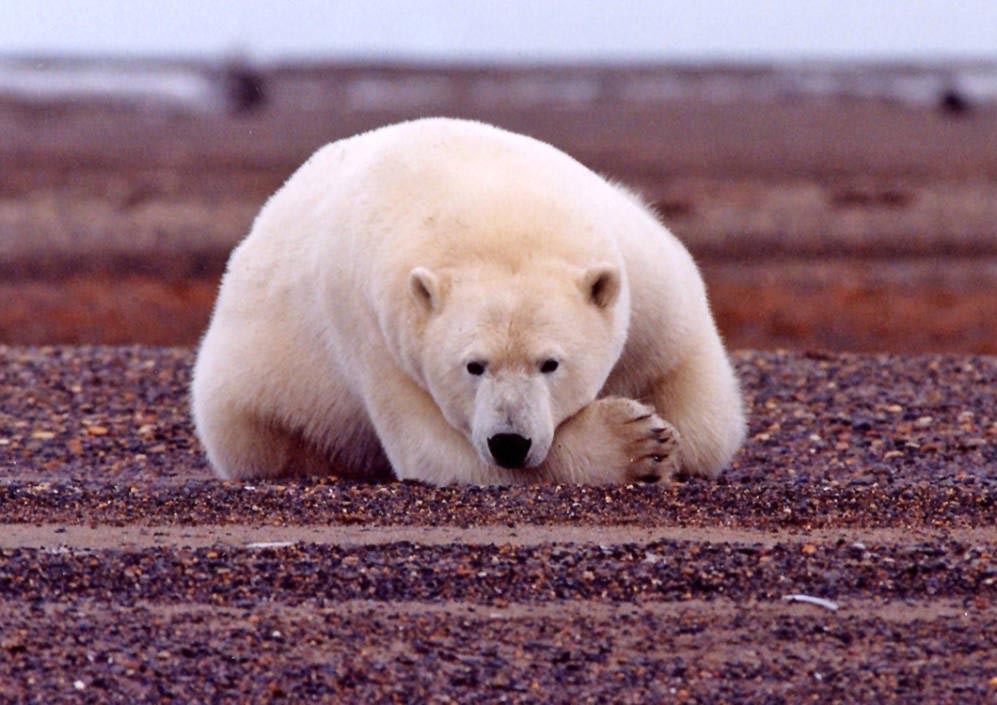
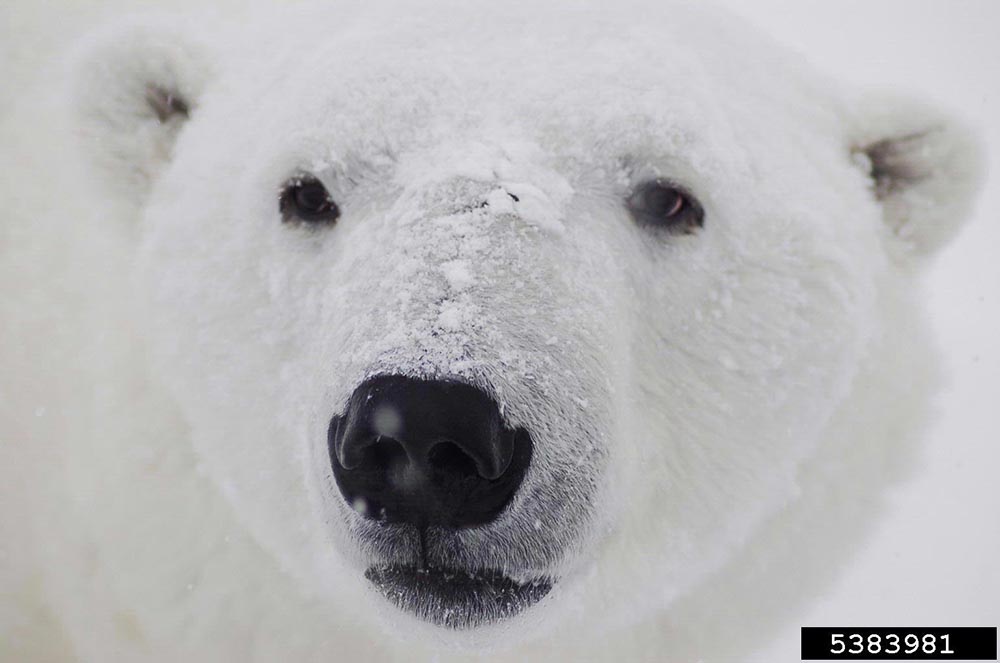
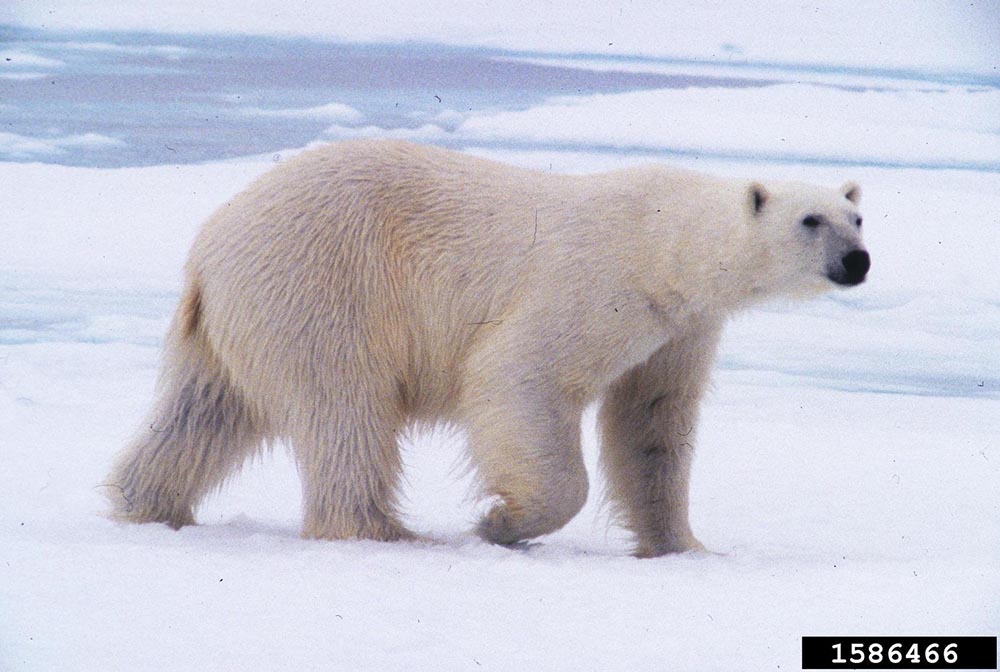
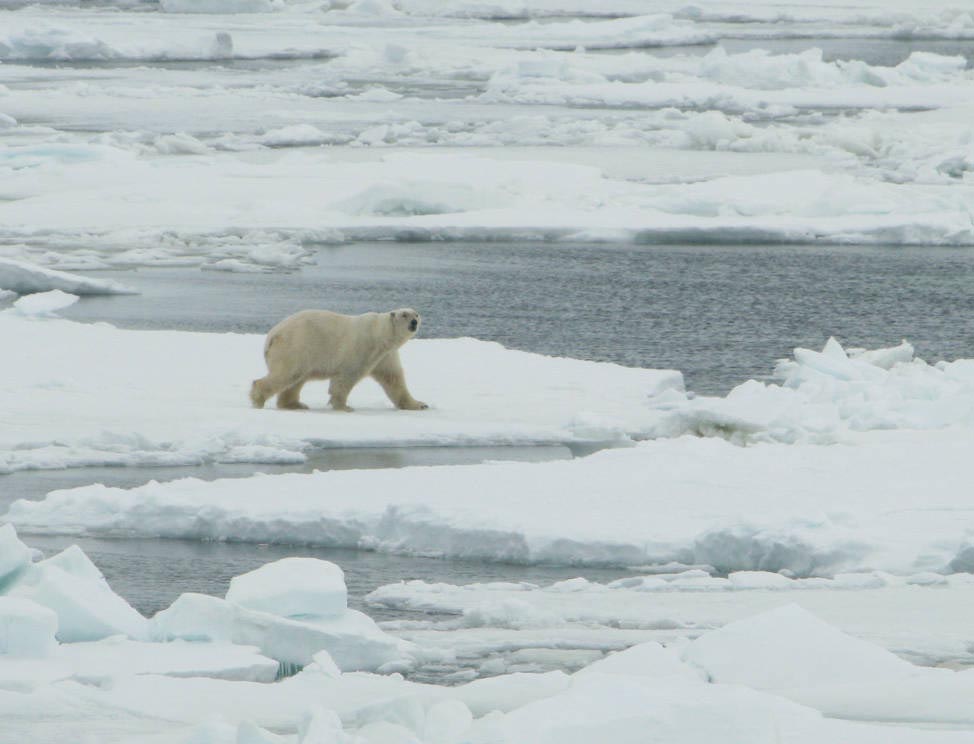
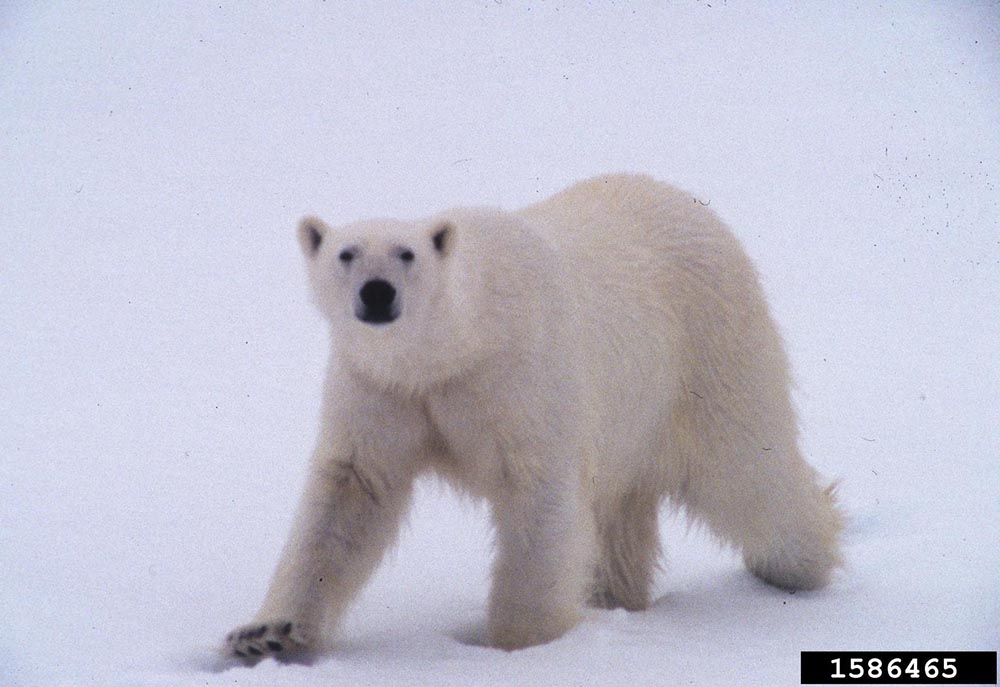
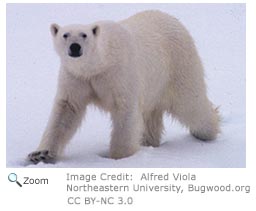
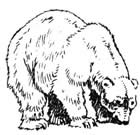
Characteristics 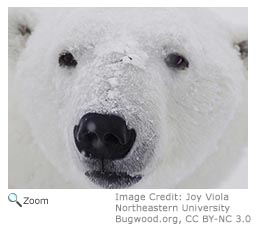 The polar bear's white fur helps camouflage it in its polar environment. The polar bear has two layers of fur, a soft under coat and an outer coat of guard hairs. The guard hairs are hollow and help the polar bear float! The polar bear's white fur helps camouflage it in its polar environment. The polar bear has two layers of fur, a soft under coat and an outer coat of guard hairs. The guard hairs are hollow and help the polar bear float!
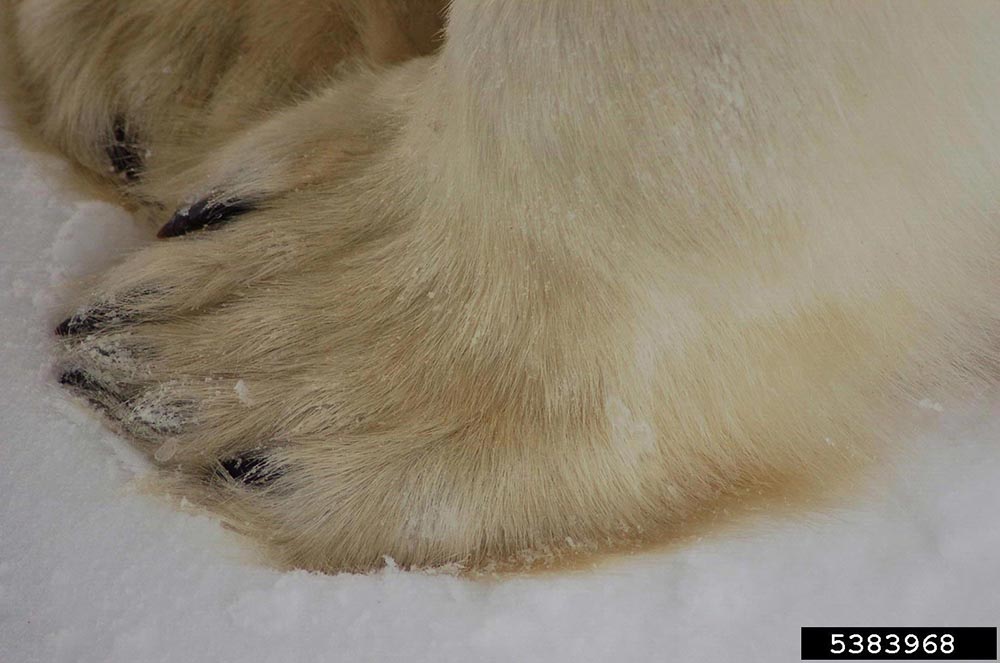
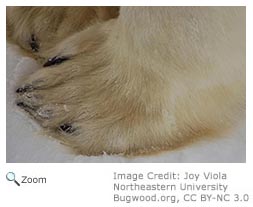 The polar bear has fur on the soles of its feet that helps protect it from the cold and ice and prevents the polar bear from sliding on the ice. The polar also has some webbing between its toes that help it paddle in the water. The polar bear has fur on the soles of its feet that helps protect it from the cold and ice and prevents the polar bear from sliding on the ice. The polar also has some webbing between its toes that help it paddle in the water.
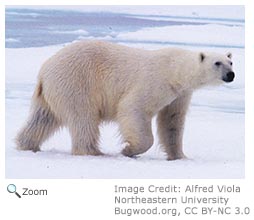 Its long neck helps the polar bear keep its head above water when it is swimming. Male polar bears are larger than females. They can weigh as much as 1,600 pounds. Its long neck helps the polar bear keep its head above water when it is swimming. Male polar bears are larger than females. They can weigh as much as 1,600 pounds.
Range
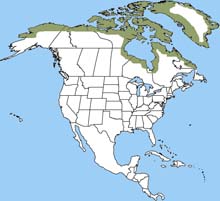 The polar bear can be found around the North Pole. It can be found in Greenland and the far northern areas of North America, Europe and Asia. The polar bear can be found around the North Pole. It can be found in Greenland and the far northern areas of North America, Europe and Asia.
|
|
Habitat
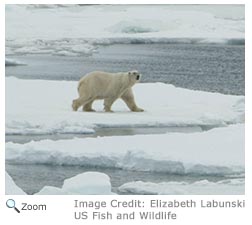 Although the polar bear is sometimes found on the tundra, it usually lives near the water and often goes on ice floes in the ocean in search of food. It is dependent on the pack ice that is found in the arctic. Polar bears will move from one floating ice floe to the next in search of food. Although the polar bear is sometimes found on the tundra, it usually lives near the water and often goes on ice floes in the ocean in search of food. It is dependent on the pack ice that is found in the arctic. Polar bears will move from one floating ice floe to the next in search of food.
Diet
 The primary food source for the polar bear is seals. It also eats fish, seabirds and sometimes reindeer. In the summer, the polar bear may also eat berries and other plants. The primary food source for the polar bear is seals. It also eats fish, seabirds and sometimes reindeer. In the summer, the polar bear may also eat berries and other plants.
Life Cycle
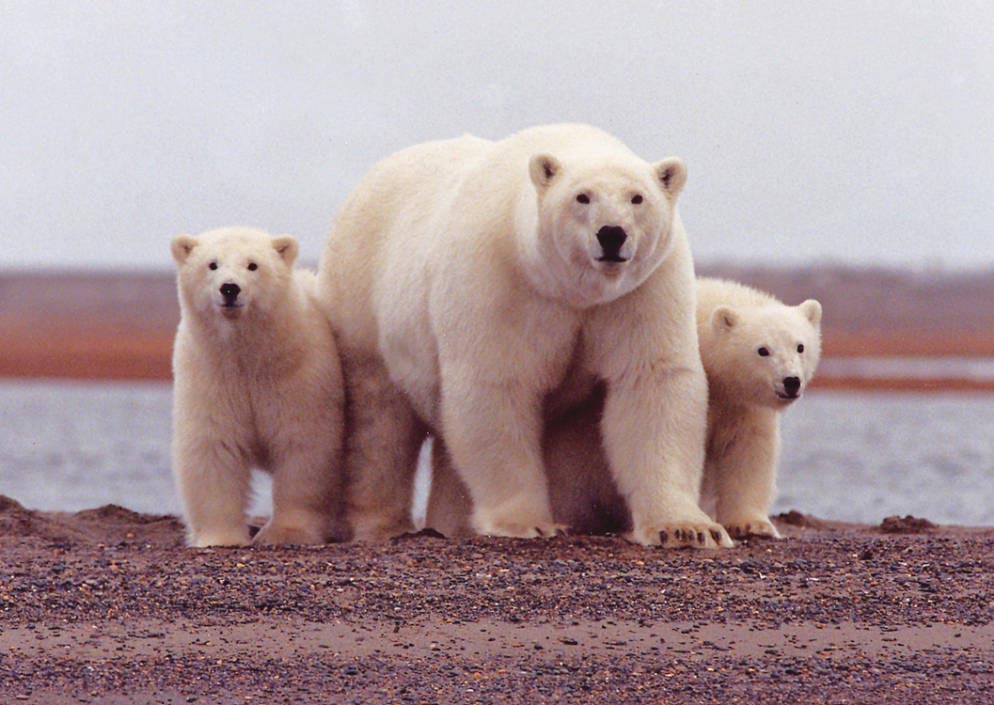
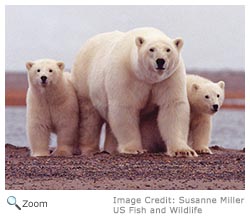 Polar bears mate every other year in mid-summer. The female digs a den in the snow and stays there for nine months until her young are born. She has between one and four cubs. The cubs are hairless and toothless when they are born and are about the size of a chipmunk! The cubs stay with their mother for one to two years. Polar bears mate every other year in mid-summer. The female digs a den in the snow and stays there for nine months until her young are born. She has between one and four cubs. The cubs are hairless and toothless when they are born and are about the size of a chipmunk! The cubs stay with their mother for one to two years.
Behavior
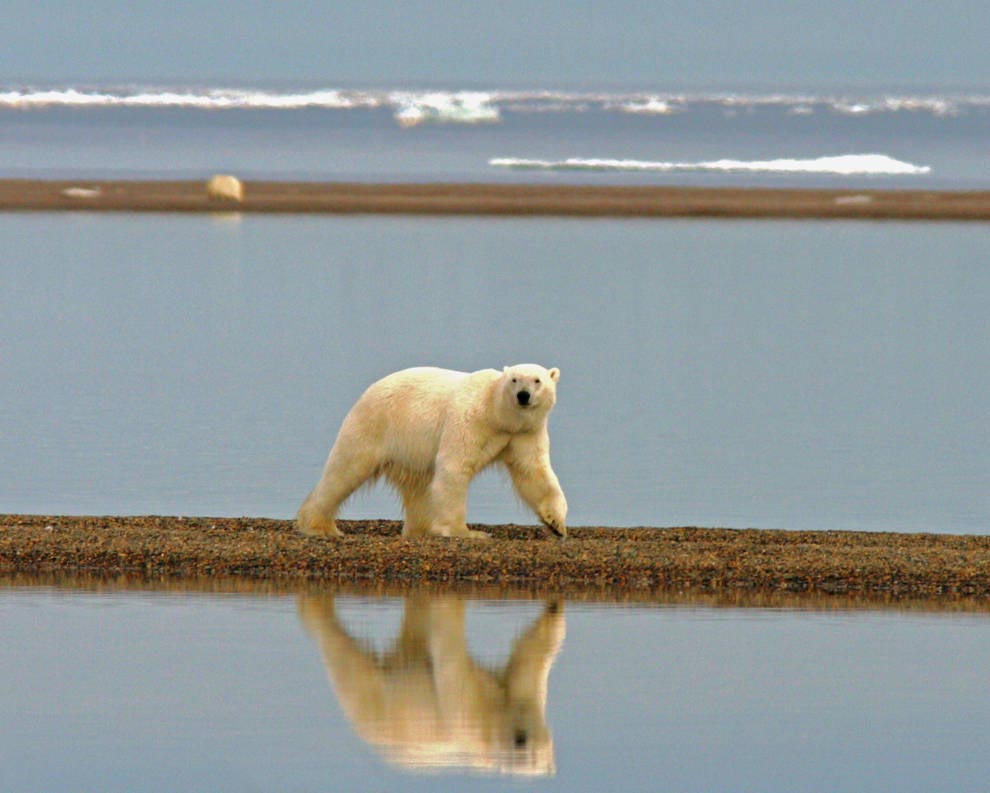
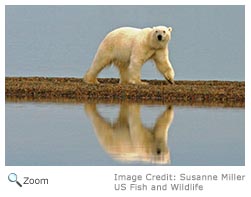 The polar bear is nomadic. It travels to find its food. It often follows seals as they migrate south. The polar bear usually travels alone and stays near the water's edge. It is a very good swimmer and spends a lot of time in the water hunting for seals. The polar bear can swim as far as 60 miles without resting and can swim at speeds of up to six miles an hour. It can dive to depths of 15 feet and can stay under water for about two minutes. The polar bear is nomadic. It travels to find its food. It often follows seals as they migrate south. The polar bear usually travels alone and stays near the water's edge. It is a very good swimmer and spends a lot of time in the water hunting for seals. The polar bear can swim as far as 60 miles without resting and can swim at speeds of up to six miles an hour. It can dive to depths of 15 feet and can stay under water for about two minutes.
|


 Characteristics