Characteristics
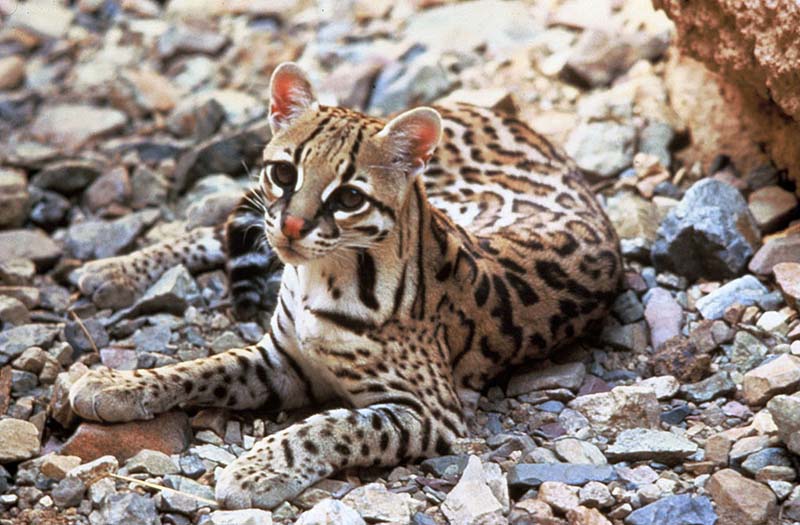
 The ocelot has gray to golden brown fur. It has brown spots and patches bordered in black on its sides. It looks a lot like the margay, but its spots come in many patterns like rosettes, slashes, speckles and bars. It has two to three stripes on its cheeks and four to five horizontal stripes on its neck and chest. It has a long tail and big eyes. The ocelot has gray to golden brown fur. It has brown spots and patches bordered in black on its sides. It looks a lot like the margay, but its spots come in many patterns like rosettes, slashes, speckles and bars. It has two to three stripes on its cheeks and four to five horizontal stripes on its neck and chest. It has a long tail and big eyes.
Range
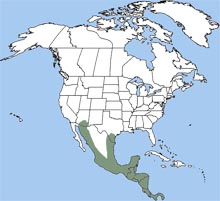 The ocelot is found from Arizona and Texas south to Argentina. It is an endangered species in Arizona and Texas. It was once found throughout Texas and east into Arkansas and Louisiana, but due to habitat loss and hunting, the ocelot population in the United States is probably less than 100 individuals in Texas and Arizona. The ocelot is found from Arizona and Texas south to Argentina. It is an endangered species in Arizona and Texas. It was once found throughout Texas and east into Arkansas and Louisiana, but due to habitat loss and hunting, the ocelot population in the United States is probably less than 100 individuals in Texas and Arizona.
Habitat
The ocelot makes its home in forested areas and in dense chaparral. |
|
Diet
The ocelot eats mice, rabbits, rats, birds, snakes, lizards, fish and frogs. The ocelot is solitary, but sometimes hunts with another ocelot. It calls to its hunting partner with meows that sound like a house cat's call. The ocelot hunts most of its prey on the ground, but sometimes catches birds in trees.
Life Cycle
The ocelot mates year-round. About 70 days after mating the female gives birth to one to three young. The female makes a den in the brush. She leaves the kittens at night to hunt for food, but she spends the day with them. The kittens begin hunting with their mother when they are about three months old. The kittens may stay with the mother for up to a year.
Behavior
The ocelot does most of its hunting at night. It rests in trees or dense brush during the day. It has a home range of between one and four square miles.
|