Characteristics
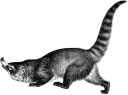
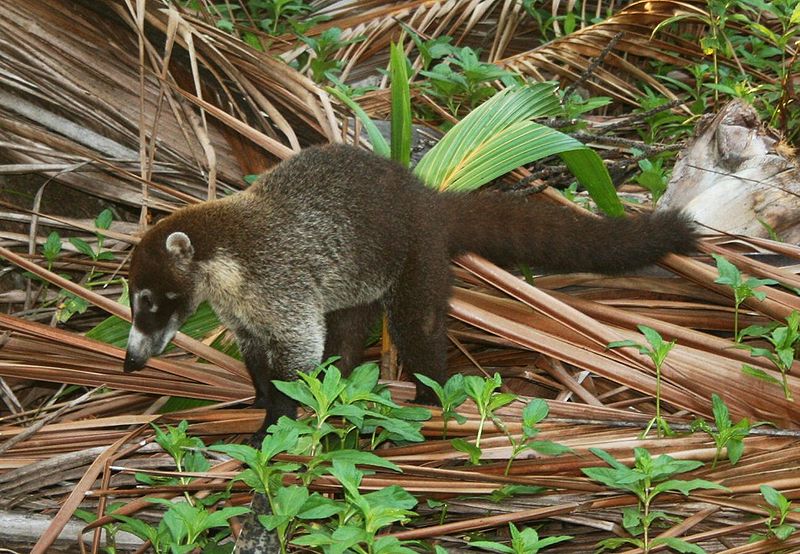
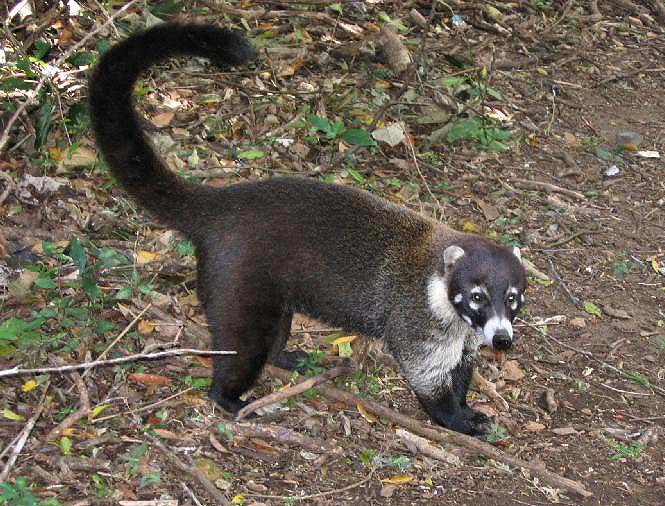
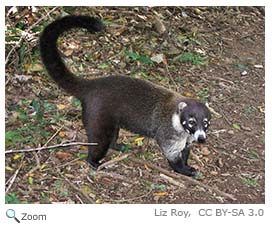 The white-nosed coati is a member of the raccoon family. Its body is 1.5-2 feet long, and its tail is 2 feet long. It holds its long, thin, ringed tail upright when it is walking. The white-nosed coati is a member of the raccoon family. Its body is 1.5-2 feet long, and its tail is 2 feet long. It holds its long, thin, ringed tail upright when it is walking.
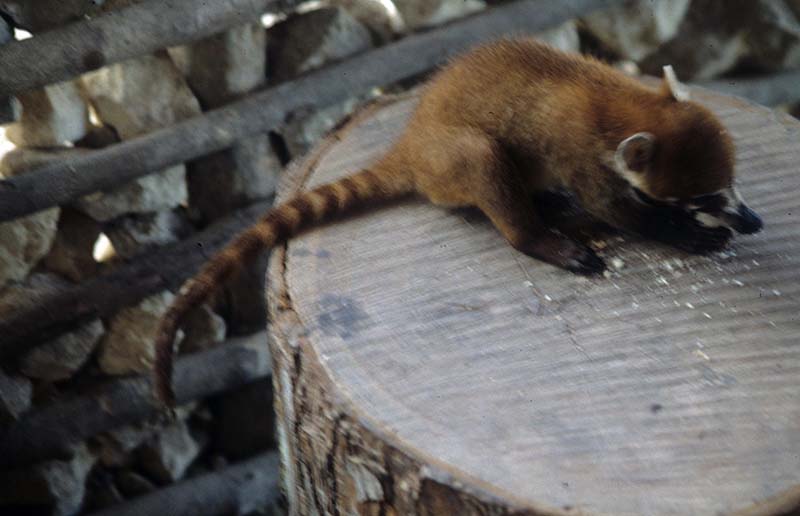
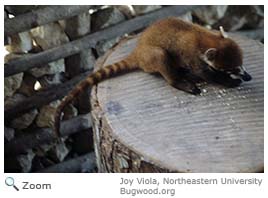
It has small ears; long, sharp claws; and a long, pointed snout that tilts up a little at the tip. It has a black mask and white around its eyes, nose, and on the inside of its ears. Its fur is brown with a mix of red and yellow on top and a lighter brown on its undersides. Its lower legs and the tops of its feet are blackish-brown. Males and females look alike, but males are much larger.
Range
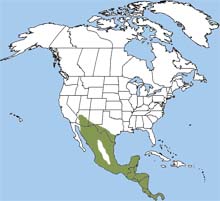 The white-nosed coati is found in the southeast corner of Arizona, in the south west corner of New Mexico, and in southwest Texas. It is also found in Mexico, Central America, and South America. The white-nosed coati is found in the southeast corner of Arizona, in the south west corner of New Mexico, and in southwest Texas. It is also found in Mexico, Central America, and South America.
Habitat
The white-nosed coati lives in mountain forests and in woody canyons.
Diet
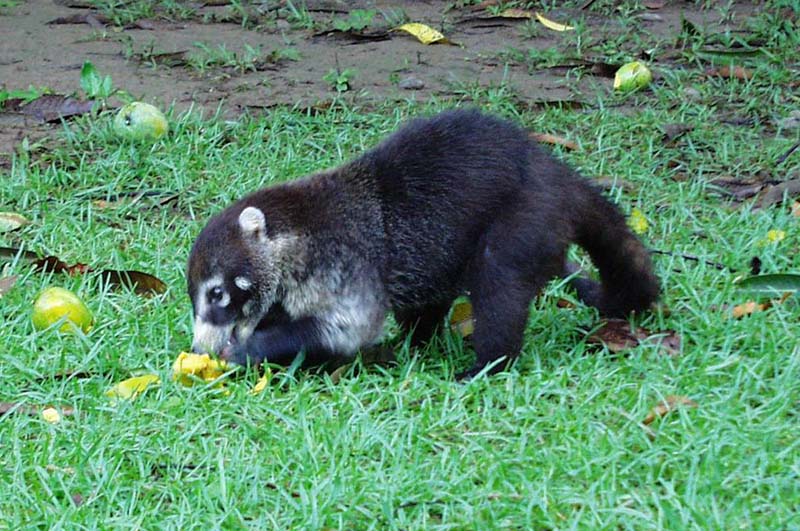
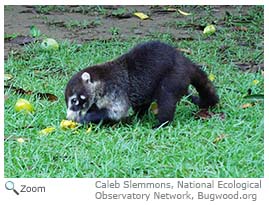 The white-nosed coati is omnivorous. It uses its long snout and sharp claws to forage for food. It often sniffs along the ground, pushing leaf litter out of its way as it roots for prey like beetles, grubs, ants, termites, spiders, and scorpions. The white-nosed coati is omnivorous. It uses its long snout and sharp claws to forage for food. It often sniffs along the ground, pushing leaf litter out of its way as it roots for prey like beetles, grubs, ants, termites, spiders, and scorpions.
When it smells something underground, it uses its sharp claws to dig out the prey. The white-nosed coati's diet also includes lizards, snakes, carrion, rodents, nuts, and fruits.
One of its favorite fruits is prickly pear. It will return to the same prickly pear tree again and again until the tree is stripped bare. |
|
Life Cycle
The white-nosed coati mates between January and March. Males join female family bands. The male warns off competing males by baring his teeth, rearing up on his hind legs, and turning up the end of his snout.
Once the male has mated, the females in the band force him to leave the group. When the female is ready to give birth, she leaves the band. She has a litter of 2-6 young about 77 days after mating. She usually has her litter in a nest made in the crevice of a tree. The young leave the tree when they are four weeks old.
The mother and her pups rejoin the band when the pups are 5-6 weeks old. The pups are weaned when they are about four months old, but they stay with their mother until she leaves the band to give birth to her next litter. The white-nosed coati's life expectancy is about 14 years.
Behavior
 Although the white-nosed coati spends a lot of time on the ground looking for food, it is also a very good tree climber and swimmer! Its long tail helps it keep its balance. It usually spends the night sleeping in a tree.
The male coati is solitary, but females and their young live and travel in packs of 4-40 individuals. They often take a break from foraging for food to groom each other.
Unlike most members of the raccoon family, the coati is active during the day, although adults may find a shady spot to nap when it gets too hot! Young coati are very playful and spend a lot of time chasing and wrestling with each other. |